

The Rules of Modern Business Come From His Three Innovations 80 Years Ago | A Curious Person
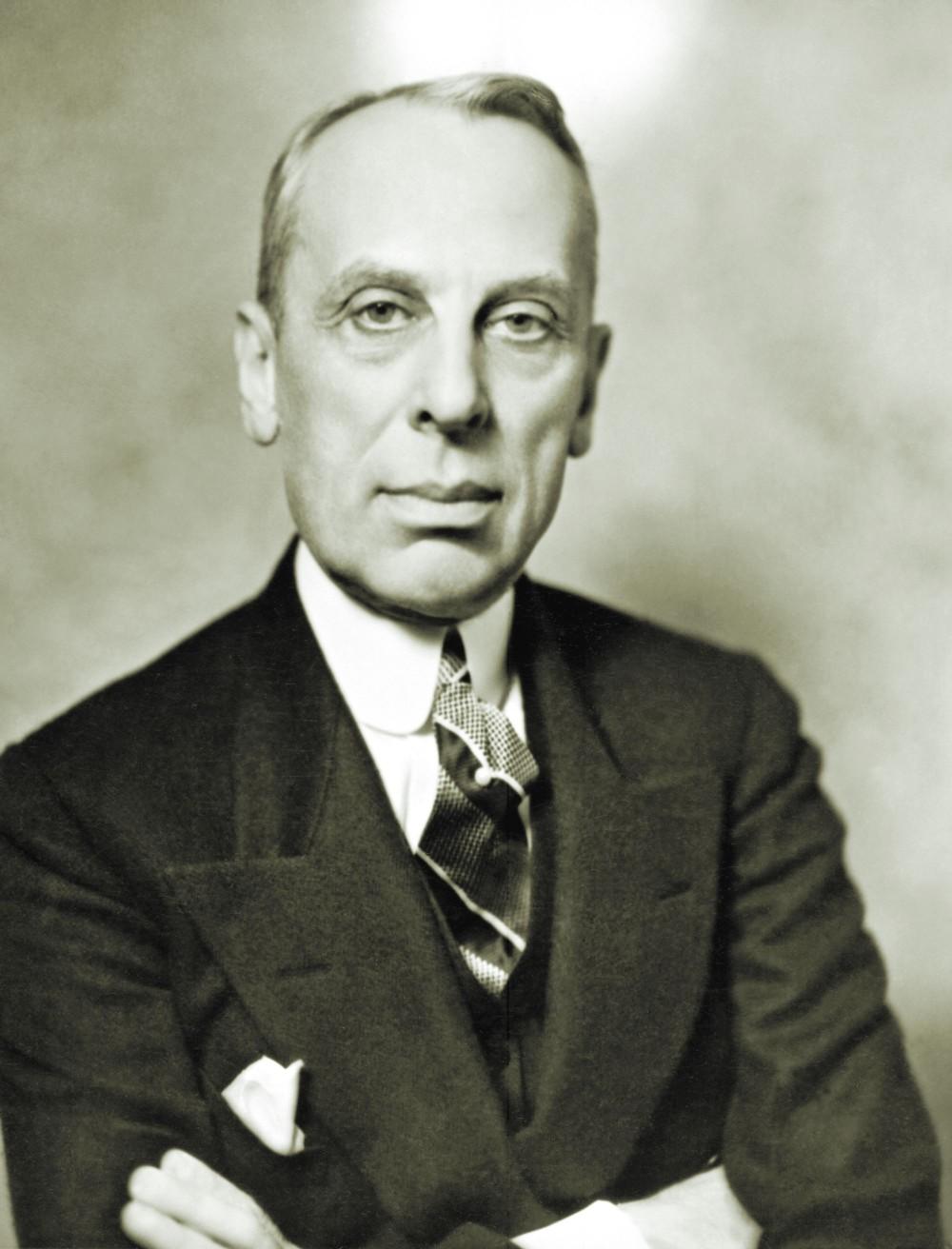
This year marks 50 years since the death of Alfred Sloan. At 48, this management genius took over General Motors.
This year marks 50 years since the death of Alfred Sloan. At 48, this management genius took over General Motors.
Who he is: Alfred Sloan (1875–1966), American businessman and president of General Motors for 25 years. When Ford ruled the car market, he led GM from behind to victory, and in the 1930s GM became the American car company with the largest market share.
Why he's curious: He built the divisional structure, the product-line policy and the "annual model" strategy. One man set the rules an entire industry runs by.
For the 20-odd years after the modern car was born (the late 19th to the early 20th century), the auto industry revolved around mechanics and engineers. The car was a sophisticated machine for its time, but it was new, and it broke down in all sorts of ways. It is no surprise that engineers had the loudest voice in the trade.
But by the 1920s, Ford had built more than 15 million of its dependable Model T, and competition in the car market was starting to bite. What might happen if the industry still put technology first and looked down on business?

Here is one scenario. To hold their place, car companies would do whatever their engineers asked: pour money into research, expand production and buy up strong parts makers to perfect their technology. But with no grip on finances, no feel for the market and no sense of how to run a company, they would soon fall into financial crisis and infighting. Their products would either die on the drawing board or, with supply and demand out of balance, set off ruinous competition and sit unsold...
In fact, this happened to General Motors twice, until one man turned things around. That man was Alfred Sloan. He served as GM's president and chief executive from 1923 into the 1950s.
Sloan was the first to see that the auto industry's future belonged to business people. After joining GM, he applied a business logic all his own and pulled the company back from the brink. Before 1940, GM's market share rose from 1% to 45%, while that of its biggest rival, Ford, was crushed from 60% to 16%.
To get there, Sloan did three things: he built the company's internal organizational structure, introduced a product-line policy and brought in the idea of the "annual model." These three innovations later grew into something bigger than General Motors itself.
Before looking at what they mean, it is worth mentioning another man: Henry Ford, founder of Ford Motor Company. Both Ford and Sloan gave the world's auto industry something it had never had. Ford pioneered the assembly line and solved the problem of how to build cars. Sloan designed GM's internal structure and solved the problem of how to run a car company.
Interestingly, although both men did so much for the auto industry, they differed sharply in many ways. Ford founded Ford Motor Company; he was a creator. Sloan was a professional manager who rescued GM from disaster. Ford favored central control; Sloan was a thoroughgoing decentralizer who believed that only dispersed power and clear responsibility could deliver the highest efficiency. Ford believed the Model T alone could keep his company on top forever; Sloan saw early that multiple product lines were the future, and launched a range of models aimed at different buyers...
It was this difference in thinking that led to GM's crushing victory, and to Ford, having missed its chance, handing over its market share.
Sloan was born in 1875, 12 years after Ford. While the Model T was selling by the millions, Sloan was working at Hyatt, a ball-bearing company that made auto parts. In 1916, GM founder William Durant bought Hyatt and several other parts makers and merged them into a new company, United Motors Service, with Sloan as president. The company was a subsidiary of GM.
Sloan soon found that Durant, for all his creative genius at buying companies, knew nothing about management. In the GM that Durant ran, jobs were created to fit people rather than the other way round. Cronyism was rife, divisions moved money around as they pleased, and problems often went uninvestigated because no one was clearly responsible. This led directly to GM's two major crises, around 1910 and around 1920, and Durant lost control of the company both times.
Sloan opposed this way of running a company. To him, a clear internal structure with clearly assigned responsibility was the foundation of any company that worked. So he designed an extremely complex structure. In it, each product defined a department, called a division. Each division had its own full set of functions (design, purchasing, cost accounting, manufacturing, sales and so on) and ran itself, while budgets and operating targets were set centrally by head office. Put simply, the divisions were "unified in policy, decentralized in management," so that every division ran its business in the interest of the company as a whole.
On top of that, each division's chief executive had absolute authority over his own division and reported only to the company president. That freed the president to concentrate on setting overall policy, rather than "getting bogged down in less important matters that could safely be delegated to executives."
It is said that before designing this structure, Sloan read the U.S. Constitution more than anything else. The "unified policy, decentralized management" of his organization resembles the relationship between the federal government and the states.
Ford, however, met Sloan's idea with loud ridicule. In his autobiography, Ford wrote: "To my mind there is no bent of mind more dangerous than that which is sometimes described as the 'genius for organization.' This usually results in the birth of a great big chart showing, after the fashion of a family tree, how authority ramifies. The tree is heavy with nice round berries, each of which bears the name of a man or of an office. Every man has a title and certain duties which are strictly limited by the circumference of his berry..."
Ford did not see that Sloan's system would fundamentally raise a company's efficiency. Still less would he have wanted to see that in the 1940s, as GM's efficiency soared under this structure, Ford Motor itself was being described as "disorganized and wholly inefficient." Only in the late 1940s did Ford's heir, Henry Ford II, finally grasp the importance of management and bring in people to build a structure like GM's. By then, Ford was at least 25 years behind GM in management.
In fact, it was not only Ford that lagged. When Sloan built this structure in the 1920s, no American company had tried anything like it. Nearly 100 years later, the same basic structure runs companies we deal with every day, such as McDonald's and Procter & Gamble. In 2001, China's Midea Group adopted Sloan's divisional structure; it then shot to prominence, quadrupling its sales in four years.
But the divisional structure was not Sloan's only legacy. His second reform at GM was the product-line policy.
Until the early 1920s, the American car market belonged to Ford. Ford followed a single-model philosophy: it sold one car, the Model T. Because it was cheap, the car was hugely popular and sold strongly for more than 10 years. GM, by contrast, had several product lines, but none at prices ordinary people could afford. Even the cheapest Chevrolet cost twice as much as a Model T and sold poorly. Worse, Sloan's divisional structure had not yet been put to use, so the company had no overall policy. Each division went its own way, setting production and prices on its own, so several models landed in the same price bracket and sales were badly inefficient.
Sloan's idea was that the company should offer a different model in each price bracket. First, this would stop GM's own cars from competing with one another. The models across the price brackets would form a product line (from lowest to highest: Chevrolet, Oakland, Buick Four, Buick Six, Oldsmobile and Cadillac) covering every grade from economy to luxury. Sloan said the bottom of the line could go as low as the bottom of the market (that is, close to the Model T), but the top models still had to be suitable for mass production. Second, to keep the number of models reasonable, the price gaps between brackets had to be large, but not so large that they left holes in the line.
It was like telling consumers: we can meet any need you have. As your life gets better and you grow more prosperous, trade in your economy Chevrolet and move up to a Buick or a Cadillac. Whatever your needs and whatever your means, GM has a car for you.
At the heart of the product-line policy was Sloan's insight into how consumers trade up. When the car first appeared, it was a rich man's toy. Then Ford, by cutting prices, made it part of everyday American life. But over time, what excited buyers was shifting from simple, practical cars to ones that looked better, rode more comfortably and performed better.
This understanding led to another of Sloan's contributions: the "annual model." Once the car had gone from luxury to necessity, people wanted something more from it, such as an attitude to life or a sense of progress, and that something showed itself in the way a car looked.
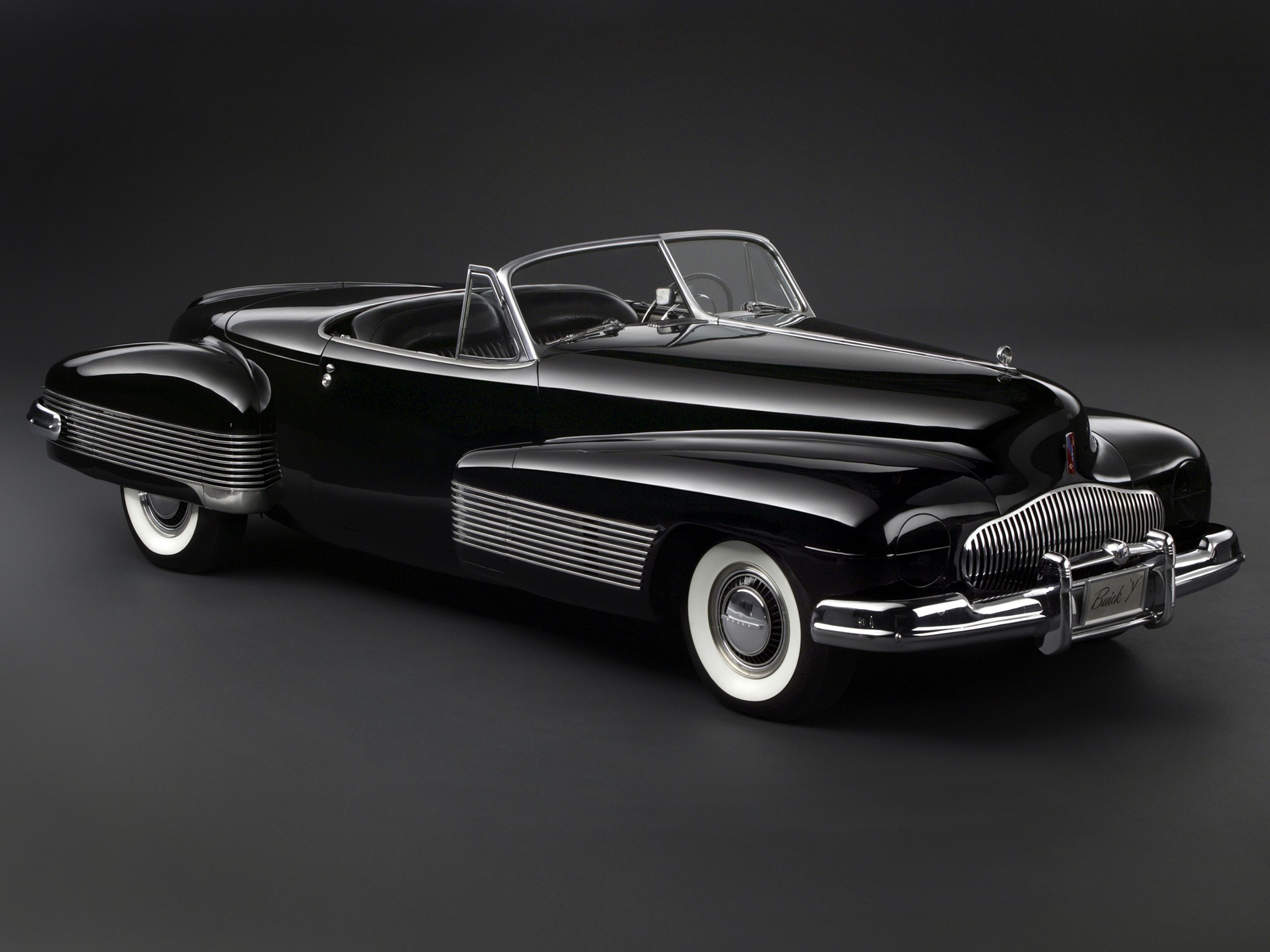
In 1927, Sloan found Harley Earl, a young designer who built custom car bodies for Hollywood stars, and brought him to GM. That year, Earl designed the hugely popular LaSalle, which looked small, nimble and stylish. Before Earl, no one but engineers had ever designed cars.
Ford saw none of this. Ford insisted that a young person's first car should be a cheap Model T, but GM's multiple product lines and new models every year took Ford's customers away. GM also taught consumers the idea of the "used car": as incomes rose, people traded up, their old car became a used car, and someone else's old car might become their new one. This was the hardest blow to Ford. It could no longer even count on being the first, entry-level car.
As the used-car market grew, auto finance grew with it: sell your old car to a dealer as the down payment, and pay off the rest slowly with a loan. Suddenly, low prices, the weapon Ford was so proud of, no longer mattered.
After these reforms, GM's market share rose fast, crushing Ford's to less than a third of what it had been. Between 1927 and 1939, GM earned nearly $1 billion, while Ford barely broke even.
Many years later, around the financial crisis, when GM was marking its centenary and was in deep trouble, then vice chairman Bob Lutz was still lamenting the company's state. Against the slump at home, China was GM's one bright spot that year, and there GM was still following Sloan's old strategy. It was this multi-product-line philosophy, "a car for every purse and purpose," that kept GM's share growing.
It is worth stressing that both the product-line policy and the "annual model" were Sloan's own inventions.
"Our policy could also fail. If the whole industry had thought this policy would work, surely someone would already have tried it," he wrote of the product-line policy in his autobiography, My Years with General Motors.
As for the "annual model," it not only set the busy and slow seasons of American car sales (after GM, many carmakers chose to unveil their new models each autumn); Steve Jobs also used it as the template for the iPhone. Every year, people around the world wait eagerly for the new iPhone launch.
Designing the company's structure, introducing the product-line policy, creating the "annual model": each of Sloan's innovations of the 1920s became a rule of modern business.
His foresight went further still. At a time when relations between carmakers and dealers were touchy, he visited dealers regularly and learned about the market from what they saw on the front line. As early as the 1920s, Sloan understood the value of return on investment: "The key is not the amount of profit but the relationship of that profit to the capital invested in the business." He cared about people. "The people responsible for organization and the delegation of authority matter more than the organization itself," Sloan once said. Because he saw talent as an important asset, he was willing to "invest 20 years in that young man."
Charles Wilson, later nominated as U.S. Secretary of Defense, summed up Sloan's contribution to the American auto industry, and to modern American business, this way: "What is good for our country is good for General Motors, and vice versa."
Sloan died of heart disease in 1966, at 90. By then, the Chevrolet had become a symbol of America.
His New York Times obituary recalled an episode from the 1930s. Someone told him that a man of his standing ought to own a yacht. He spent 1 million on one, but soon grew bored with it. In 1941 he sold it for less than $200,000, one of the few "financial losses" of his life.
After his death, Henry Ford II called him "one of the few men who truly made the history of the auto industry." The New York Times called him "one of the greatest industrial leaders of this era."
Cover images from
curbsideclassic.com, oldconceptcars.com
This is part of the "51 Curious People" seriesThe list may keep growing, if we find curiosity remarkable enough.
Translated from the original QDaily article. Original publication date retained.