

You Can't Talk About How Jeans Changed the World Without the Levi's 501
Let's look at the rise and fall of a fashion icon — how it became a classic, how it declined, and how it was reborn.
Let's look at the rise and fall of a fashion icon — how it became a classic, how it declined, and how it was reborn.
In 1860, the 84th year after the founding of the United States, the Patent Act — originally signed into law by President Washington — was revised for the third time. The revision extended patent protection to 17 years from the date of grant. Until then, in this young nation on the North American continent, an invention was protected for only 14 years.
If not for that "17 years," LS&Co (full name Levi Strauss & Co.), the first company in history to mass-produce jeans, might have launched its most classic product, the Levi's 501, even earlier.
In 1890, LS&Co lost patent No. 139,121 — the invention of using rivets to strengthen work pants. To protect the brand and set itself apart from the other brands on the market, the company redesigned its riveted work pants and released the first product it named with a number: the 501.
In 1999, at the turn of the century, Time magazine called the Levi's 501 "the greatest fashion invention of the 20th century." And it was both: a garment silhouette and the trend that silhouette led. It stood for American style, and really for American culture itself. It is no exaggeration to call the Levi's 501 the ancestor of all jeans; for a long time afterward, it was the word "jeans."
Once the patent lapsed, imitators and competitors would arrive fast. Everything about jeans was about to begin.

Born for the Working Class
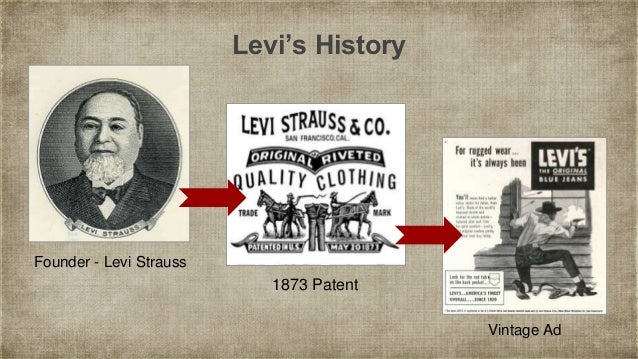
In the 1850s the United States was going through its first industrial revolution, and the Gold Rush was raging in the West. Levi Strauss went to San Francisco, close to the gold fields of Sacramento, California, and opened a dry goods store there selling clothes, blankets, and handkerchiefs.
One day he heard miners complain about how much money the gold fields cost them in clothing, especially pants that fell apart within a few months. Levi Strauss decided to make one small change: he cut a pair of overpants from waterproof canvas that workers could pull on over their trousers to take the wear.
These overpants were made of yellow-green waterproof canvas. Because they went over ordinary trousers, they were cut high in the waist, wide and loose. This was still a long way from jeans in the modern sense — and they were called overalls, not jeans.
The overalls were a hit with the miners as soon as they appeared. In 1850 Levi Strauss registered his company and replaced the waterproof canvas with indigo twill originally made in Denime, France, upgrading the fabric of the baggy overalls. He also added a small pocket inside the right-hand pocket, so workers had somewhere to keep valuables such as a pocket watch.
Before long, Levi heard another complaint: the pants tore easily at the points that took the most strain, like the corners of the pockets and the bottom of the crotch seam. Jacob Davis, a tailor from Nevada, suggested combining reinforced stitching with copper rivets to fix the problem. The two men filed a patent for it and, in 1873, began selling a rivet-reinforced version of the work pants. This was more or less the prototype of the Levi's 501 — it just had no official name until LS&Co's patent came under threat.
This mid-rise, straight-leg cut was not LS&Co's own invention, though. What set the Levi's 501 apart was the anti-wear rivets it added to the traditional men's work pant.
Improvements: Always the Same Loose, Straight-Leg Jeans
Over the next century-plus, the Levi's 501 evolved about once every ten years. That was the stretch in which it turned from a "workingman's uniform" into a fashion item.
In 1890, after the patent lapsed, the 501 largely kept the loose overall cut of the work pants: no waist shaping, wide legs, held up by suspenders. To make it fit a little better once on, a cinch buckle was added at the back of the waistband. Having lost patent protection, Levi's also redesigned its trademark, adopting the leather patch with two horses pulling at a pair of pants.
Like every fashion item designed in the age of industrial mass production, the Levi's 501 was tied closely to the spirit of its time.
The 1922 model was the 501's first evolution: under the influence of First World War uniforms, it got belt loops for the first time. The 1933 model reflected its moment even more directly — it was a product of the Great Depression.
Franklin D. Roosevelt took office at a time of overcapacity across the Western world, which set off an economic crisis. To bring order to industry, the government passed the National Industrial Recovery Act and set up the National Recovery Administration, hoping state power could stand in for the market's invisible hand by fixing each company's output and market share and preventing blind competition. The Levi's 501 passed the U.S. government's "fair practice certification," and the small white tab was the "proof" that it had.
The 1944 501 is more interesting still. For exactly the reason Gucci launched its bamboo-handle bag after the Second World War, this 501 swapped its flat buttons for metal ones with a hole in the middle, and its main button carried an olive branch, the symbol of peace. To save more wartime material, the two reinforcing rivets above the right-hand watch pocket were dropped. At the worst of the shortages, the 501's buttons could not even be kept uniform. Levi's was reluctant to grant this version a place in the lineage, so it gave it a special number, "S501XX" (the "S" stood for "simplify") — the implication being that it was only a stripped-down edition.
Beyond meeting the demands of its era, though, the 501's design also kept trying to solve the functional problems of jeans.
Before the 1930s belts had not yet entered mainstream fashion, and the 501's design accommodated that ambiguity of taste, keeping both the suspender buttons and the belt loops — courting younger men who were taking to belts while still serving older, more conservative customers who wanted suspenders. By 1937, the 501 dropped the suspender buttons after all.
Because consumers in the eastern United States were not used to buttons, the jeans acquired another era-defining feature as they moved from the western market to the eastern one: the zipper. In 1954 the Levi's 501 replaced the buttons on its fly with a zip, releasing two versions of the 501 for the first time and naming the new one "501Z."
From its birth in 1890 through 1966 the 501 also adjusted its red tab and designed concealed rivets, but its loose, straight-leg cut never changed much.
It Was American Culture, Youth Culture — It Was Cool Itself
American sailors and soldiers carried the Levi's 501 around the world. But to become a hit it also needed stars to champion it, and Marilyn Monroe was one of them. In 1954 she appeared, sultry, in Levi's 501 in River of No Return. The New York Times wrote at the time: "It's hard to sum up in a few simple words — Monroe and the scene are both so captivating." Later the denim brand Guess had the model Anna Nicole Smith copy Monroe's famous look for an ad.
Another key figure was John Wayne. In 1939 the film that made his name, Stagecoach, came out. In this classic Western — its plot taken from Guy de Maupassant's short story Boule de Suif — John Wayne wore Levi's 501 as a cowboy. Until then, the cowboys of American Westerns still wore fringed leather chaps. After it, jeans had made it into the Western as a genre, and became part of the standard cowboy outfit.
And the 1950s Hollywood sex symbol James Dean, in his red jacket, white T-shirt, and jeans, turned the Levi's 501 into a badge of "individuality and rebellion." The Beat Generation was one of the 501's main groups of buyers. In 1955 the Beats, with Jack Kerouac, Allen Ginsberg, and William S. Burroughs at the front, stepped onto the stage of history. These young people "on the road" used their clothes to tell the world they were unhappy with it. If you've seen Forrest Gump, in the scene where Forrest meets his true love Jenny again, you can probably pick out a few pairs of Levi's 501 on the people around them.
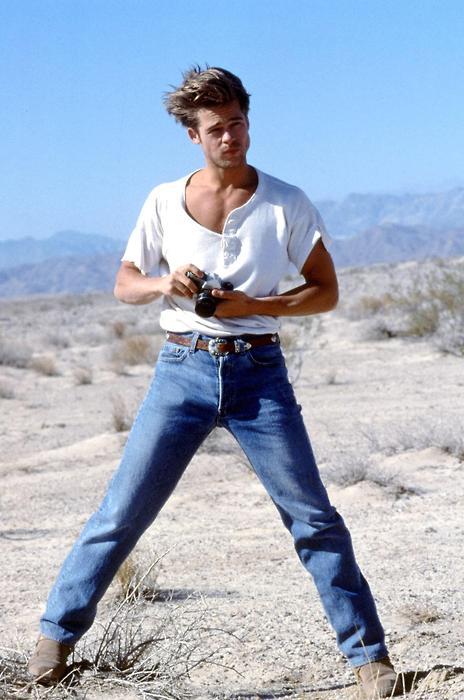
In 1986 Nick Kamen appeared in a Levi's 501 ad called Launderette. The story goes that the swagger and sex appeal of him stripping down to wash his clothes pulled the 501 line back onto the fashion stage; the ad also ran everywhere, on television and in cinemas. Brad Pitt made a 501 ad too, in 1993, before he was a household name, the year he appeared in the classic road movie Thelma & Louise. His was a prison ad, now a classic: just out of jail with nothing on but his underwear, he catches a pair of 501s thrown to him by the beautiful woman who has come to pick him up.
American cultural export was powerful enough that in 1980s Mexico the 501 was not just clothing but currency.
In 2015 the American writer Sam Quinones published Dreamland: The True Tale of America's Opiate Epidemic, which recorded the U.S.-Mexico heroin trade of the 1980s and 1990s. Levi's 501 jeans were close to a circulating "currency" — the amount of heroin in a penny balloon was worth about two pairs of jeans.
If a dealer who had travelled from Mexico to the United States came home wearing a pair of jeans, or handed them to someone as a gift, people knew his deal had gone through. More important, in Mexico at the time the 501 was a mark of a man's standing — expensive and hard to get — so owning a pair meant not only that he had money but that he had "connections" in that advanced society, the United States.
The Decline of Levi's the Company
For LS&Co, the Levi's 501 was the pillar of the company's revenue. Apart from the famous 501 line under the Levi's brand, the group's other well-known product was the khakis from Dockers. But the group's revenue has always come mainly from the Levi's brand, with the 501 at its core; earnings reports from 2013 to 2015 show Levi's as the group's most profitable brand throughout, at around 85% of total revenue.
After the youth movements faded, though, the whole Levi's brand faced a problem of aging: its loose jeans were, for a while, seen as the kind of thing "dads" wore.
There was also the problem of Levi's Vintage Clothing. Known to everyone as LVC, the line consists of Levi's reissues of classic 501 designs made between 1873 and 1983.
For the Levi's brand, 1983 was a watershed. As one nice formulation has it: before 1983 it was still classic Levi's; after 1983 it became supermarket Levi's.
This has to do with Japan, which has always liked to imitate American fashion. Levi's made LVC itself for a while, then stopped. The Japanese had begun copying Levi's jeans early on, and once the American LVC's own factory shut down for the first time, products from Levi's Japanese factories gradually became the mainstream of reissues — the "Japanese-made" versions.
The fabric of the Japanese-made LVC was in fact not as good as the American, but its craft used more exacting dyeing and washing techniques, and it also took Asian builds into account, scaling the LVC pattern down proportionally. That extreme craft pushed Japanese LVC past the American standard. What was once called "the best jeans in the world" means specifically the Japanese-made LVC of 2000 to 2007.
Because Japanese LVC sold well and was so admired, Levi's made an unexpected discovery: imitating itself was very profitable. It went on to produce LVC in Turkey, Mexico, and the Dominican Republic. Unfortunately, this broad increase in output turned into repeated tweaks made only to suit modern taste, which pulled down the quality LVC used to have, sent sales across the whole LVC range sharply down, and ended with the Japanese and American LVC factories all shut.
By 2014 Levi's had fallen to its lowest point in ten years. Its high-water mark was 1996, when $7.1 billion in sales beat even Nike's $6.4 billion that year. By 2001 sales had dropped to $4.25 billion, while Nike's reached a startling $20.8 billion. In the dozen-plus years since, Levi's revenue has stayed in the $4-billion range. According to a Euromonitor report, Levi's global market share fell from 7.2% in 2004 to 5.3% in 2013, and in the United States, its biggest market, from 14.4% to 12.5%. In 2012, Levi's dropped off the Fortune Global 500 for the first time ever.
The company probably did not see this coming. Who would have thought a fashion item that had lived through the westward expansion, the Gold Rush, the Great Depression, the Second World War, the youth movements, and the hippies would say goodbye to the world so easily?
But fashion in the 21st century really is more complicated. More jeans were on the rise, and athleisure was sweeping all before it. In the second quarter of 2013 alone, Levi's women's jeans sales at major U.S. retailers fell 10%.
"The athleisure trend keeps getting stronger, and consumers are basically telling us they have enough jeans already — unless something truly distinctive and innovative shows up, they won't buy more," said Marshal Cohen, an analyst at NPD. "But the jeans industry and jeans retailers are stubborn and arrogant. Their view is: we don't care what you want, we'll tell you what you need."
This is not Levi's problem alone, of course. The whole jeans industry has been trying to work out how skinny yoga pants took over the streets.
So Levi's settled on its current strategy: don't make yoga pants; just make jeans more comfortable, and keep the essence of the 19th century.
In 2010 Levi's started a new women's jeans line, Curve ID, in which every size came in three curves — slight, demi, and bold — with different colors and leg openings. Retailers were not keen: they didn't want that much inventory, or to have to explain so much to customers.
At the same time Levi's set up a new lab in San Francisco, the Eureka Lab, and its first product again took aim at the most classic line, the 501. This "youthened" version was called the 501 CT, and it no longer sold only the slightly wide "straight" cut, but a narrow-leg one as well.
Will It Become a Niche Taste, or Restart a Trend?
Levi's is in much the same position as Converse, whose most classic old Chuck Taylor went 98 years without a major change and only got a second version last year. But Converse is working hard at a revival — see the further reading at the end of this piece. And sneakers are riding high right now, which is nothing like what jeans are going through.
There are too many historical details about the Levi's 501 to fit here. Once it became a classic, it was worshipped for years. In the history of fashion, the argument over whether clothes define the person or the person defines the clothes never stops. What's interesting is that the long-lived Levi's 501 has probably done both, and nobody has ever closed the case. The Levi's 501 is still alive, after all, and Levi's may be trying to find in that relationship some meaning beyond the sales figures.
In May 2001 the oldest known Levi's 501 was auctioned on eBay; LS&Co bought it for $47,000 and put it in its archive. Wander around online for a while and you find an enormous amount of talk about these jeans. Because real antiques are hard to find, one question 501 fans argue about often is how to tell a genuine Levi's 501 — so the cut, the leather patch, the buttons, even the zipper and the thread on the hems all become evidence.
Some have asked, worried: will the classic Levi's 501 have an heir? No product in jeans fashion does seem to have surpassed this classic — and for LS&Co itself the 501 is also a template. By 2016 the company had released roughly 28 different cuts, several of them improvements on the 501. The 505 is an upgrade of the 501: a straight-leg zip-fly version released with pre-shrunk fabric.
For other denim brands, the Levi's 501 is something like a muse. The drawn-line style on the 501's back pockets inspired brands like EVISU to paint their back pockets when they started out; that brand's best models, the No. 1 and the No. 2, were designed from the LVC 501 reissue of the 1966 Levi's 501. Momotaro, Kojima, even EDWIN and Uniqlo also borrow from the Levi's 501 in their denim.
Re/Done, the new Los Angeles denim brand, said outright when it launched that it was learning from the Levi's 501.
"To create the perfect fit, we took the Levi's 501 apart and then adjusted it so it better suits modern needs," said Sean Barron, a partner at Re/Done. "The president of Levi's even called to encourage me. And we don't think of Re/Done only as a brand — it's more a process of getting closer and closer to the tradition of jeans."
That proves why a classic is a classic, but it also shows the competition Levi's faces. Judging by the earnings report the company released for the first quarter of 2016 (ended February 28), its focus on women's jeans — especially slim-fit and super-stretch styles — brought it large gains.
In this situation the Levi's 501 will probably go on existing, but it will surely go through the most violent change in its history.
Cover and in-text images from: thechatterjis, ytimg, mr-oldman, thedayintech, slidesharecdn, denimblog, hypebeast, lsco.scene7, lsco.scene7, jianshu, fossilsanastory.



Translated from the original QDaily article. Original publication date retained.