

Where Does Handmade End and Machine-Made Begin? He Has an Answer Worth Hearing
An interview on what 3D technology means, ethical fashion, fashion's sense of humor, and democracy.
An interview on what 3D technology means, ethical fashion, fashion's sense of humor, and democracy.
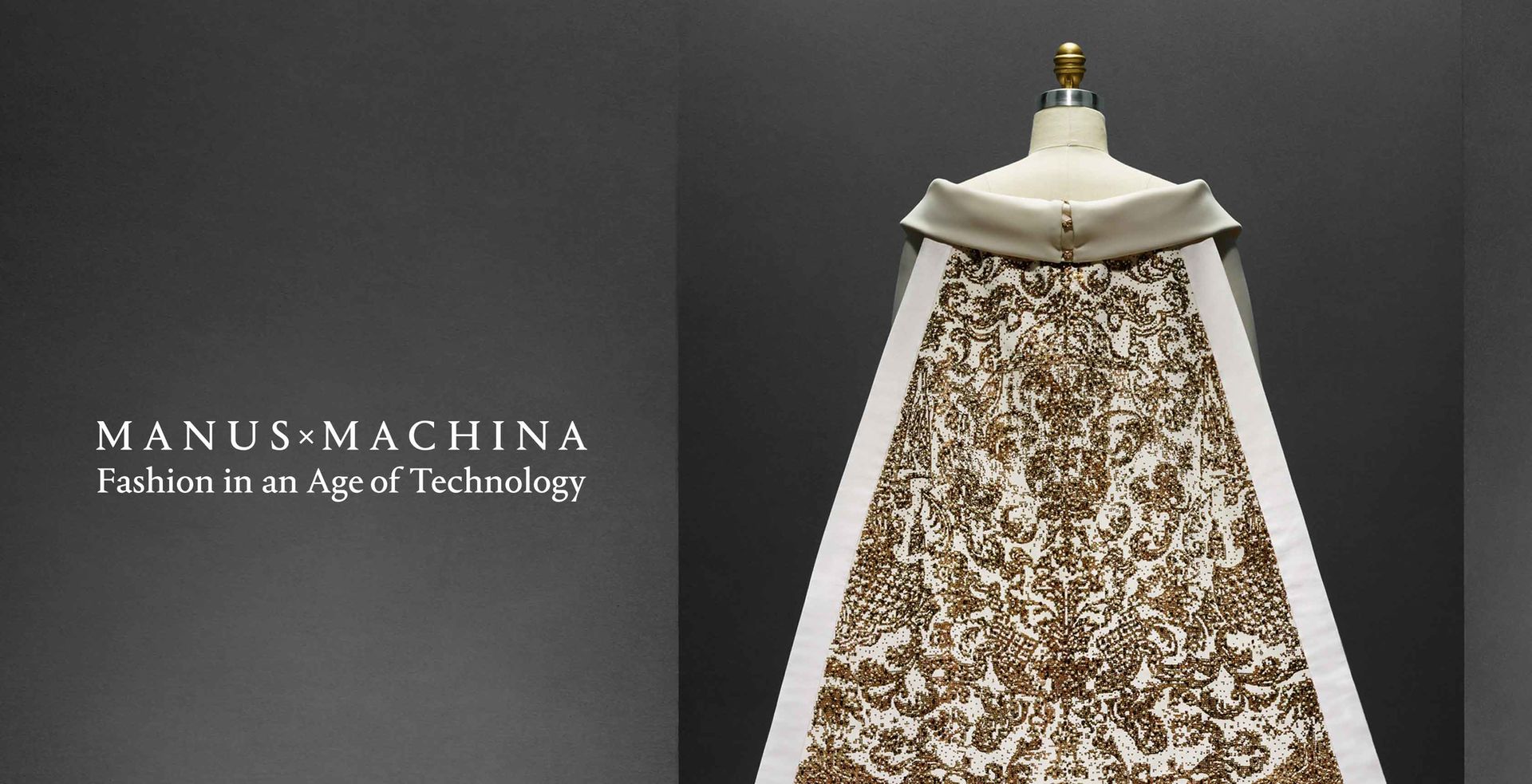
Last weekend, Manus x Machina: Fashion in an Age of Technology, the Metropolitan Museum of Art's big 2016 show, closed in New York.
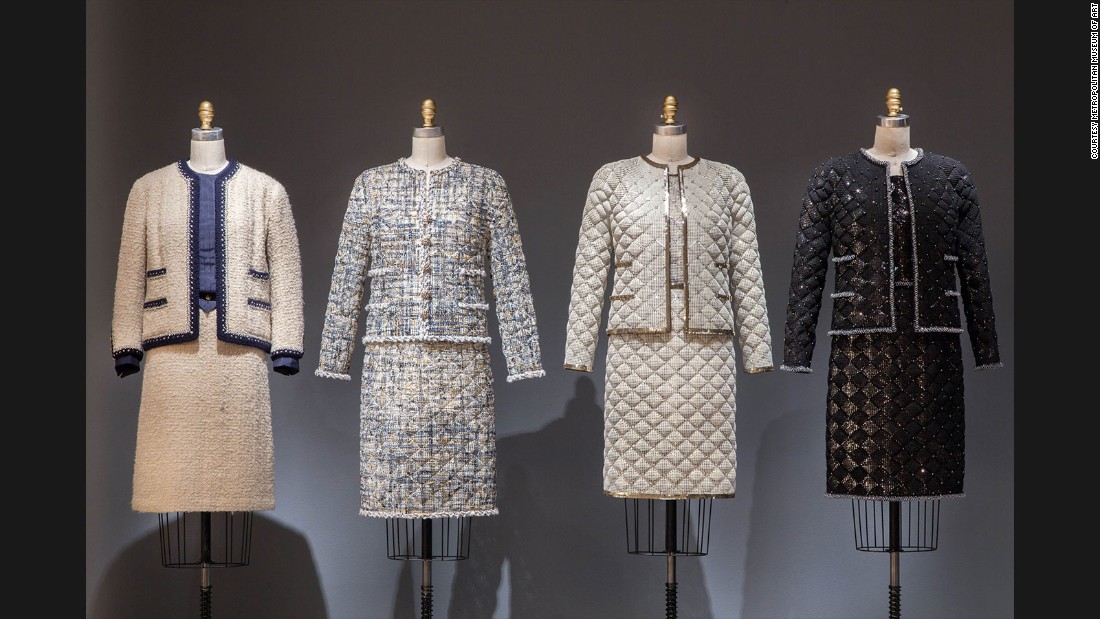
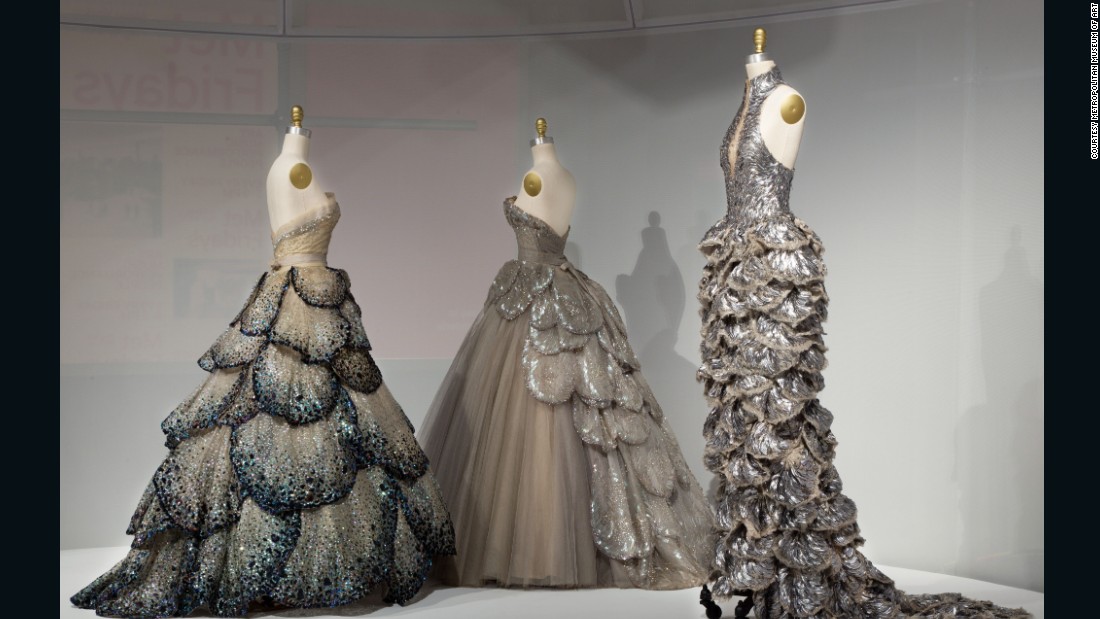
It had opened on May 5 with a selection of haute couture and ready-to-wear from the 20th and 21st centuries, pairing couture and ready-to-wear pieces that share a design form. On view were Martin Margiela's Spring/Summer 1997 "Semi-couture" collection, which blurred the line between a garment and the body inside it; the deconstructed pieces in Dior's Fall/Winter 2005 couture collection, cut to look like a tailored garment left half finished; Mariano Fortuny; Madame Grès; and Hussein Chalayan's LED dress.
The point was to make visitors compare what different decorating and making techniques actually produce, and so to ask where machine production ends and handwork begins.
The museum also published a catalogue of the same name. In its introduction, curator Andrew Bolton traced the origin of the rule that haute couture must be made by hand: "The French haute couture federation, founded in 1910, made the dividing line between hand and machine not only more deeply rooted in the modern fashion system but also more institutional. This became especially clear in 1945, when the federation issued written rules for handmade couture." The implication of that history seems to be this: the handmade rule was a man-made measure meant to protect French economic interests and French industry, a product of its moment — and not something that should stay fixed as time moves on.
In other words, the show used contemporary images and values to ask what machine production is, what handwork is, and whether the two definitions have shifted and begun to overlap.
As the run neared its end, REDEF, a news site that covers pop culture, interviewed Andrew Bolton. He talked about why he made the show, and — more interesting — about 3D technology in fashion, ethical fashion, fashion's sense of humor, and democracy.
It is a serious interview, and a funny one. Here is part of it. To read the original, click here.

1. The show asks where machine production ends and handwork begins
"The show asks where machine production ends and handwork begins. Traditionally, handwork is tied to luxury, to individuality, to originality; machine production is taken to be uniform, industrial, impersonal. But it isn't that simple. I think that throughout the history of the fashion industry there have always been machine-made things that took longer and cost more than handmade ones. That is what Manus x Machina is after."
2. Was there any criticism from visitors you couldn't swallow?
"What surprised me most, in fact, was how open-minded they were. A lot of people came, and there was plenty of disagreement. Some people see the word 'technology' in a title and assume the show is about wearable tech. Before we opened, I worried the show wouldn't match what people expected. We had that problem with a punk exhibition years ago. We wanted to look at what punk culture did to high fashion, and visitors told us they had come expecting 1970s street punk."
"On the whole, people took this show on its own terms. They caught what we wanted to say — the attention to materials. They really were looking at the clothes themselves: at what was made by hand and what was made by machine."
3. 3D printing is not the first thing to link fashion and technology
"The third revolution, the electronic one, has been discussed for a long time. Fashion and technology have been bound together since the first Industrial Revolution — this did not start with 3D printing — though the early applications were mostly in textiles. Fashion is an industry that takes up new technology fast. Right now that relationship is evolving, not moving into some new stage."
4. Are consumers more willing to accept machine-made things?
"I think consumers care more about quality now, and more about what mass machine production does, not just how much of it there is. For a long time many people were wary of technology, even afraid of it. I always wanted to make an exhibition that showed that fear inside fashion, because it is one form of the fear of technology."
"Fashion and technology come together in very practical ways. When 3D technology arrived, none of us knew how it would change fashion in the end. But I think it will prove as revolutionary as the loom. It could make fashion more democratic: you could keep a printer at home and print the T-shirt you want. That would be the final form of fashion — though with today's technology we are nowhere near it."
5. Ethical fashion is a balancing act
In his introduction to Manus x Machina, Andrew Bolton quoted Diderot's Encyclopédie: "The clothing trade rests on the same ethical foundation as art and technology." Bolton then drew his own comparison: "The clothing trade is worth as much as poetry or medicine."
In fashion today, the word "ethical" has widened. It now points mostly at what production does to the environment and to people.
"I think 'ethical' in fashion means responsibility. The fashion industry pollutes a great deal, and both designers and factories owe something to the environment. For many designers that is hard to manage. Take fabric: chase beauty and you give up on the environment; put the environment first and the fabric loses its appeal. [Ethical fashion] is a balancing act."
6. Right now, 3D printing is used to copy nature
Iris van Herpen had several pieces in the show made with snail shells, coral, and other material from nature; they look markedly "organic."
"If you talk to designers like Iris van Herpen and Noa Raviv, they will tell you that the practical uses of 3D printing push it toward more organic forms. That is the practical way to think about it, but I think there is philosophy in it too. Right now, 3D printing is used to copy nature."
7. The show set out to use beauty to unsettle what consumers think they can tell apart
Manus x Machina included work by designers few people know, Noa Raviv and Maiko Takeda among them. How did Bolton find them?
"Through the magazine Dezeen, actually. Both are pioneers at joining hand and machine."
"Noa Raviv came to 3D printing through trial and error on a computer. I have long been obsessed with the question of whether a machine, with no human hand involved, makes mistakes on its own. And whether, with no human hand involved, a machine can be creative. Some of Raviv's work carries a Platonic romance and the rules of Greek beauty — symmetry, perfection. If you use a machine to make something in that style, will the machine wreck it? I am keen on the reconciliation of perfection and flaw, on the difference between a mistake made by a human hand and a mistake a machine makes on purpose."
"What is interesting about Maiko Takeda is that the machine-made, high-tech look of her work is in fact all done by hand. I admire that. And the whole point of Manus x Machina was to use beauty to unsettle what consumers think they can tell apart. Sometimes a thing you would swear came off a machine was made by hand. Then look at Christopher Kane: you would take it for handwork, and a machine did it."
8. Christopher Kane is in the show because his work is Christian Dior's 1950 designs made contemporary
Several of Christopher Kane's floral dresses were chosen for the show.
"Mainly because I see Kane's work as a contemporary version of what Christian Dior was designing in 1950. So we put the two of them side by side. Both used flowers, embroidery and organza, both in praise of the beauty of women. Look closely at Kane and the organza and the flowers amount to a piece of shameless sexual provocation. For me it recalls Georgia O'Keeffe's famous close-up flower paintings. It is a clever way of tying sex to flowers — think of the body of a flower and the body of a woman."
9. Some designers use design for humor, others for intelligence
"There is a lot of humor in fashion. Plenty of European designers show a very particular humor and irony; very few American designers do. Thom Browne is the obvious example, along with Jean Paul Gaultier, John Galliano, and Rei Kawakubo of Comme des Garçons. More and more designers want humor in their work. Other designers would rather their work read as clever, as intelligent — Martin Margiela and many of the Belgians. The two camps don't meet. John Galliano and Alexander McQueen sit somewhere in the middle."
10. Fast fashion is dystopian
"The fast fashion business model insists that fashion is by nature disposable. What those brands sell can't show a designer's talent — it can't even show their failures. It leaves no room to develop an idea. Fast fashion is pure consumption: use it once, throw it out. It is dystopian, and it kills off part of the art in fashion. I do admire the democratizing of fashion — fast fashion does put clothes in front of ordinary buyers cheaply. I just dislike what the model does to creativity."
11. Is there a way to protect a designer's intellectual property, avoid the waste of fast fashion, and still make fashion more democratic?
"I think culture steals by nature. I have never thought 'copying' in fashion was a problem. A writer dies, and years later you read what he thought and you can still use it today. I feel the same way about couture."
"Fashion increasingly takes a mix of people. Building a label takes designers, pattern makers, stylists; it is collaboration, a deep exchange. The idea that one person can stand alone is fading in this industry."
"The most interesting part of fashion is how a person builds a style — how people wear fast fashion with vintage, how they make things themselves. On the other hand, pure originality is rarer and harder to find, on the runway and on the street. We live in a homogeneous world, and I do miss the days when originality was everywhere."
12. Hard times breed freedom in fashion
"This looks like a self-satisfied age. Look at the periods in history when fashion was most inventive: they were usually slumps. Punk in London in the 1970s came at the worst economic moment in British history, and it was also the most creative era for personal style. The same goes for New York's East Village at the time. I think hard times breed freedom in fashion — more kinds of personal expression, more ways of wearing it. People need something to push against before they can win anything for themselves."
"The same holds in other economies. On street style, Japan is an interesting case. Cosplay fascinates me: it is a complicated way of using clothes to say who you think you are. Tokyo may now be the world capital of personal style."
Cover image and in-article images from:
metmuseum, sohogrand, i2.cdn.turner, pictures.zimbio.com, i2.cdn.turner, i.ytimg



Translated from the original QDaily article. Original publication date retained.