

Five Years Without Jobs: Which of the Changes He Set in Motion Stuck, and Which Didn't?
How long has it been since an electronic gadget last excited you?
How long has it been since an electronic gadget last excited you?
On October 5, 2011, Steve Jobs died at home, and a rare wave of public mourning began around the world.
Heads of state delivered eulogies; newspapers put his photograph on front pages and in special editions. Tech leaders, TV hosts, musicians, reporters, Apple employees, rivals — it seemed that everyone who had ever crossed paths with him was describing how moved they were, on social networks or in front of a camera.
At the same time, tens of millions of people who had never met Jobs were caught up in the grief too. Flowers, cards, candles and apples piled up outside Apple Stores.
Steve Jobs, the biography that only reached stores in late October that year, was the best-selling book of the entire year in both China and the United States.
Once, only politicians could stir grief that strong — and in an enemy country that same feeling usually turned into cheering.
Five years on, the picture of Jobs has grown more tangled. Last year brought two films about him and a new biography.
The films — a drama and a documentary — came from Oscar-winning directors, and many people who knew Jobs well called both of them one-sided. His successor, Apple CEO Tim Cook, put it more bluntly: the films were "opportunistic."
The new biography, Becoming Steve Jobs, came from a reporter who had been close to Jobs personally. Several sitting Apple executives, Cook and Jony Ive among them, endorsed the book and accused the 2011 biography of distorting the founder's image.
The public did not care about any of this squabbling. Both films were box-office poison.
The people who left flowers at Apple Stores were thanking Jobs for the products he made, not because they knew his private life — whether he cheated a partner out of a few thousand dollars, whether he treated his out-of-wedlock daughter well enough.
Most people who still know Henry Ford's name today know it because Ford is still a huge car brand, because his assembly line changed modern industry, because he made the car something ordinary people could afford. Not because he hired thugs to break unions, or because he wrote the anti-Semitic tract the Nazis admired.
In the end, what people will remember Jobs for is the company he built, the products he made, and the technology he pushed forward.
Unlike Ford or Walt Disney, Jobs lived in a world that moved faster. Two of the revolutions he launched early on — the personal computer and digital music — had already passed their best days while he was still alive.
When Jobs died, his newest round of revolutions was still under way: the iPhone was four years old, the iPad one.
In 2010 alone, Apple rebuilt its personal computer line with a new MacBook Air, launched the iPad to test the future of the personal computer, restarted its TV box, and bought Siri to build an artificial-intelligence assistant.
Digital publishing, digital news and digital advertising — Apple entered all three markets that same year.
Five years ago today, many of the projects he had a direct hand in had barely started.
At exactly that point his illness turned. He handed the CEO job to Cook in August 2011 and died 42 days later, several years earlier than either he or Cook had expected.
Five years later, which of the things Jobs started before he died actually changed the world, and which of them stopped?
The iPhone still matters — five years ago that was an open question
The plainest change of these five years is that no one says "iPhone Killer" anymore.
The world is now used to Apple holding an event in early September, showing a new iPhone, and drawing millions of people's attention.
Why wouldn't it? Things seem to have worked this way since 2007.
That is an illusion. The month Jobs died was also the peak of "iPhone Killer" talk since 2008.

Who would kill the iPhone was once an endless argument. BlackBerry, Palm and Nokia all shipped phones that outsiders crowned "iPhone Killers."
After those veteran smartphone makers failed, Android phones became the new iPhone Killer.
Touchscreens, app stores — whatever the iPhone had, Android seemed to have as well. And once Chinese manufacturers joined in, Android phones cost a fraction of an iPhone.
It sounded no different from the Mac losing to the Windows PC. Apple built the better personal computer; its rivals were simply far cheaper.
Even the theory behind the iPhone's failure had been written down in 1997 — disruption from the low end.
In fact, of the more than 1 billion iPhones sold since 2007, 87% were sold after Jobs died.

Apple made some bad iPhone decisions over those five years: the low-end iPhone 5c, the Maps scandal, waiting until 2014 to go big-screen.
But on the whole it kept the iPhone good. That is what the company rests on.
The smartphone is the most personal piece of technology people have ever owned. 365 days a year, 24 hours a day, it is the "personal" computer the personal computer never became.
For a product like that, value for money matters less. People will pay more for a better experience, and so the iPhone survived. What cheap Android phones disrupted was mostly expensive Android phones.
What survived along with the iPhone: the smartphone worked its way into every life
In 2015 the war in Syria escalated, neighborhoods and hospitals were hit again and again, and refugees fled in huge numbers.
Besides water, food and shelter, they now depended on one more thing — the smartphone.
Refugees used their phones to find routes, to learn what each Western European country's asylum rules were, to find cheap places to stay.
Tens of thousands joined discussion groups on social networks, hunting for routes that would actually get them to Europe and for ways around the smugglers.

In the photographs of those refugees you rarely see an iPhone. Most of the phones are Android.
Facebook, the social network they used, arrived three years before the iPhone, written in 2004 by Mark Zuckerberg on a Sony laptop.
The map they used was, in all likelihood, Google Maps, launched in 2005.
But they could not have reached any of those services without Jobs.
Before 2007, the tech industry pictured the smartphone as a small-screen office device packed with four columns of keys.

Nokia, Microsoft, HTC and Motorola had all tried earlier to make touchscreen phones popular, and all of those attempts failed. Keyboard phones like the BlackBerry and the Palm Treo took off instead.
By 2007, the future of the smartphone amounted to a better way to type email.
Even the Android phone Google had in the works looked like that before the iPhone appeared:

By Jobs' own account, the iPhone began when Apple had its engineers take multitouch technology and design a touch interface suited to fingers.
Minority Report had put a similar idea on screen years earlier. But the iPhone was the first to make it real, with the whole software and hardware experience behind it.
The iPhone's success solved the problem of how a person uses a computer on a screen the size of a palm. The App Store then made it possible for software developers to put internet services straight into people's hands.
After that the smartphone stopped being a tool for a few businesspeople and became the personal computer in everyone's pocket, wired to every kind of internet service. A market of billions kept entrepreneurs, engineers and investors pouring money into those services.
Maps, restaurant reviews, social networks, food delivery — services that had existed for years only worked their way into most people's lives once they reached the phone. And without the smartphone there would be no Uber and no Didi at all.
The past eight years of booming internet services began with the iPhone and the App Store together.
Without Jobs, it is hard to say when a new shape of computer like that would have arrived.
After the iPhone, none of Apple's bets on the future of computing have paid off
At the D8 conference in 2010, Jobs talked with two reporters for an hour and a half — the last time he laid out his thinking to the press at that length.
In that interview he discussed three markets Apple had just entered: news reading, television and tablets.
News reading:
"One of my strong beliefs is that any democracy depends on a free, healthy press. Newspapers — news-gathering and editorial organizations — matter enormously. I don't want to see us become a nation of bloggers. I think editorial is more important than ever. I'll do everything I can to help organizations like The New York Times, The Washington Post and The Wall Street Journal find new ways to distribute, to get revenue, to keep their news-gathering alive. We have to find a way to get people to pay for this hard-won content."
Newsstand, launched that year, was Apple's idea of paid news reading: a better reading experience and richer formats to get people to pay for news.
It never repeated iTunes' success at selling music. Part of that was the product — a Newsstand magazine could mean downloading tens or even hundreds of megabytes, which was no pleasure. More of it was the news business itself: when the important stories are always available free somewhere, no one has yet worked out how to make people pay.
Newsstand was shut down in 2014. Apple then shipped Apple News with iOS 9, an Apple version of Toutiao with humans tuning the article ranking. It made little difference and did nothing to help media companies make money.
Television:
"The TV industry has a subsidized business model that gives everybody a set-top box for free. That makes it very hard to innovate, because nobody wants to buy a set-top box. Ask TiVo, ask RePlay TV, ask Roku, ask Google in a few months. Sony tried, Panasonic tried, and they all failed. What you end up with is a cabinet full of boxes hooked to the TV, a table full of remotes, every one with a different interface… It's not a technology problem. It's a go-to-market problem. So Apple TV is just a hobby right now."
The Apple TV redesigned in 2010 used cheaper parts and went on to sell more than 10 million units. Not a small number, but next to the iPhone it hardly registers.
In 2015 Apple tried to move into TV content and build its own cable service. It could not persuade enough networks to join, and all it released was a new box running something closer to the iPhone's system, hoping that third-party apps — games, TV shopping — would pull people in with things other than television.
Tablets:
"When we were an agrarian nation, all cars were trucks, because that's what you needed on the farm. But as urbanization came, trucks became less important. I don't have the exact figures, but maybe one in twenty or thirty cars is a truck now. PCs are going to be like trucks. They're not going to go away, they're still going to have value, but only one in so many people will need one… Is the post-PC era the iPad? Who knows. Will it take five years, or seven? Who knows. But we're headed that way."
The iPad is easily the most important product Jobs brought after the iPhone. From the start it was an experiment in replacing the personal computer — a new personal computer built around touch.
The technology of the day held it back. The first iPad was only 9.7 inches and still weighed more than 600 grams. It was not fast enough for complex work such as video editing.
For several years after that, unfortunately, the iPad made no move toward replacing the personal computer. It stayed a couch machine for playing games and reading web pages. Apple's answer was a cheaper iPad — the small-screen iPad mini.
That set off a vicious circle. A smaller screen left too little to separate the iPad from a phone, so developers were even less willing to write complex apps for it, so it stayed a couch machine, so owners had even less reason to upgrade. The iPad 2 from 2011 is still in wide use today.
By the time big-screen phones were everywhere, the tablet market looked finished.
Only with the iPad Pro at the end of 2015 did Apple return to the iPad's original aim, a product that replaces the personal computer. It built a 12.9-inch iPad Pro and brought in Microsoft and Adobe — rivals it had feuded with for years — to write productivity apps.
In this year's second quarter iPad sales were still falling, but the people still buying were mostly buying the big models.
Whether Apple can turn the iPad Pro into a real replacement for the personal computer is still anyone's guess.
In five years, none of the new markets Jobs opened after the iPhone has broken through, and none of the underlying problems he named in that interview has been solved.
Part of the reason may be that none of these products blew past expectations the way the iPhone did from day one.
The other part is that they were not adjusted quickly enough after they shipped. Even the iPhone took several years of hardware and software revisions to mature.
Still, if Apple could not find the next iPhone, neither could anyone else trying to build a new platform.
In five years Apple's rivals found no "next iPhone" — and stopped imitating Apple
At the iPhone launch in 2007, Jobs quoted Alan Kay, a pioneer of the graphical interface: "People who are really serious about software should make their own hardware."
That was not how the industry worked at the time. America's most important software and internet companies — Google, Microsoft, Amazon — barely touched hardware.
A few years later, that shifted.
Amazon released an own-brand Android tablet at the end of 2011 and a phone a few years after. Both ran Fire, its own version of Android, so Amazon controlled the software and the hardware. CEO Jeff Bezos personally ran every detail of the phone project.
Microsoft turned in 2012: it launched the Surface, a tablet of its own design, and opened retail stores modeled on Apple's. A year later Steve Ballmer, then CEO, bought Nokia's phone business and started a reorganization that reached the whole company, replacing its business units with a functional structure like Apple's.
Google got serious about hardware in 2012 as well. It bought Motorola, built the Google Glass smart glasses itself, and acquired Nest, the smart-home company founded by Tony Fadell, once head of iPhone hardware.
Google co-founder Sergey Brin turned up at TED in 2013 wearing Glass and said that using a smartphone all day meant standing around bored, rubbing a piece of glass; Glass was a new shape of product. At that moment you could tell Google was no longer content to help other companies make cheap smartphones. It wanted a breakthrough of its own, on the scale of the iPhone.
Or take Pebble, a small Silicon Valley company. Its little team built a smartwatch that ran apps, was turned down by venture capitalist after venture capitalist, went to a crowdfunding site and sold $12 million worth of them. You could tell hardware had become sexy again.
All of this happened after Jobs died.
Five years on, none of that hardware survived.
Google Glass became the emblem of Silicon Valley hubris, and Google shelved it.
The Amazon Fire phone sold only tens of thousands of units a month; Bezos admitted defeat and killed the phone business.
Ballmer retired early — or was retired — before a search for a successor had even begun, and Microsoft's phone business all but disappeared.
Startups fared no better. Pebble is fighting to stay alive and Jawbone is close to collapse. Fitbit, the fitness-band maker that did reach the public market, and GoPro, which makes nothing smart at all, have both fallen below their offering prices, and no hardware company has gone public successfully since.
Five years later, the only American tech giant still serious about hardware is Google, which has just announced a new phone line, the Pixel.
The bigger problem is the future
"In the early 1990s the computer industry got a little boring. Microsoft and Intel had won the PC wars and innovation stalled. The whole industry's future looked like nothing but a cost-cutting game among Dell, Gateway, Compaq and HP." That is how Brent Schlender, author of Becoming Steve Jobs, remembers why he left technology reporting in 1991.
The feeling was common in the 1990s. Bill Gurley, the well-known Silicon Valley venture capitalist who backed Uber, spent four years then as a Wall Street tech analyst. He rose fast, he says, because every other analyst was leaving the PC beat.
A tool, and the cheaper the better: that was the personal computer in the 1990s, much like the VCD player once was in China.
The internet that arrived in the 1990s could hardly have been a more important breakthrough. But the personal computer held it back, and it never truly reached everyone. The early internet companies then ran straight into the crash of 2000.
Every company knew the smartphone mattered, yet it kept drifting toward the BlackBerry — another office tool.
The boredom did not break until the iPhone in 2007.
In fairness, Apple developed few of the technologies inside the iPhone. Microsoft had been using multitouch on desk-sized computers; the internet services came from Google; the processor came from Samsung; the mobile networks were built by the carriers.
But Jobs turned all of it into one finished product that anyone could use, and put the mobile internet in everyone's pocket.
Without him, technology might have taken a very different course. Mac, iPod, iPhone: this one man bent the path of technology three times.
Five years later, internet services earn more money every year, but the burst of invention set off by the smartphone and the mobile internet is running into a wall.
Hardware efforts at companies large and small have mostly failed. Since Uber, no second industry has been remade by the internet. Internet startups sitting on enormous funding cannot find a way forward. Even Y Combinator, the largest incubator in a Silicon Valley that prizes invention, now takes in founders who mostly work on enterprise businesses.
As for artificial intelligence, Silicon Valley's current obsession, most companies imagine selling it as a replacement for low-paid work: ride-hailing drivers, supermarket cashiers, phone support staff, junior clerical jobs.
Like the personal computer of the 1990s, technology has turned boring again.
How can the personal computer evolve? How can television get better? What could actually replace the smartphone?
If Jobs were alive, could he have built something new enough to break today's boredom? No one will ever know.
"He died too young. Henry Ford, Thomas Edison — by the time they died, it felt like we'd used them up," Jon Stewart said on The Daily Show after Jobs' death. "But Jobs. Ah, we weren't done with him! What now?"
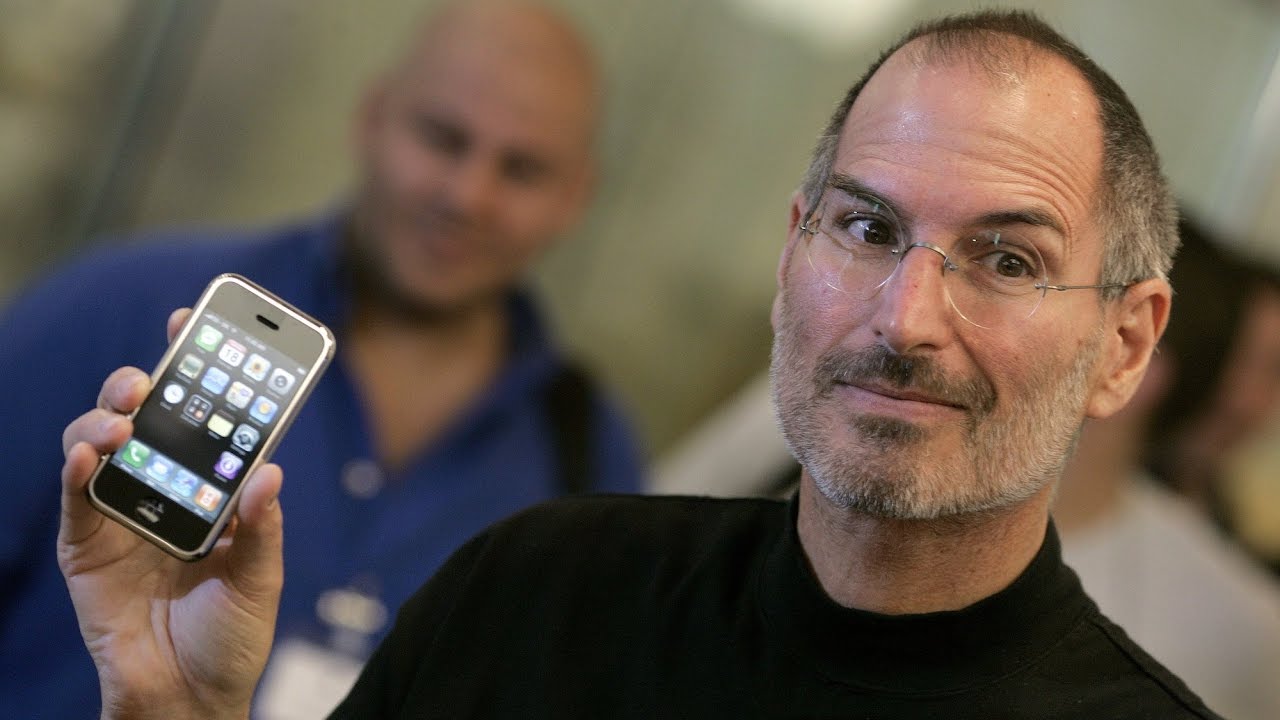
Cover image from ytimg
Translated from the original QDaily article. Original publication date retained.