

15 Things We Found Out About Eating — and You May Soon See Every One of Them | QDaily's 2017 Trend Insights ①
Both sides are subtracting from their food, yet Americans look as if they no longer want to eat anything, while Chinese consumers look as if they can never get enough. In both cases the care people take in choosing food comes from the same place: less instinctive appetite, more control and self-restraint. That may be another meaning buried inside "consumption upgrading."
Both sides are subtracting from their food, yet Americans look as if they no longer want to eat anything, while Chinese consumers look as if they can never get enough. In both cases the care people take in choosing food comes from the same place: less instinctive appetite, more control and self-restraint. That may be another meaning buried inside "consumption upgrading."
Fast-fashion-ification, rising purchase frequency, middle-class insecurity, demand shaped by demographics... In 2017, the four words "consumption upgrading" will no longer be enough to grasp where business is going.
QDaily's 2017 Trend Insights series takes up these questions from several angles, in four articles, one a day starting today. We begin with the most important thing of all: eating.
Americans seem to no longer want to eat anything, while Chinese consumers seem never to have enough to eat.
That is one of the more interesting things QDaily noticed over the past year about the question of what to eat.
They look like opposite outcomes, but the cause is the same: consumption upgrading. In plainer words, "treating yourself a little better."
In the United States, home of the world's most developed food-processing industry, treating yourself better at the table shows up mainly as resistance to processing. In technique and in ingredients alike, Americans appear to be rejecting anything artificial. Green, organic, local and natural have become the most important commercial elements in American food this year.
It isn't that American consumers only began objecting to heavily processed food today — historically, so-called natural food already set off a wave in the 1970s. But this backlash against industrially made food may have hit another peak this year. Word keeps arriving that some big food company has dropped artificial colors and preservatives, or swapped synthetic chemicals for natural ingredients; almost every American food company is working hard to look healthy.
Chinese consumers are subtracting more and more too. Low-calorie, low-sugar and low-fat are a growing trend here as well.
But consumption upgrading at the Chinese table differs from what is happening in the American market: it means eating better, healthier, safer food — and "safer" is by far the more important demand.
Frequent food-safety crises in the past produced a crisis of trust, and the result is that there aren't many local products worth trusting. In the end, imported food became one way to satisfy China's demand for consumption upgrading, and an ever-bigger market.
That is why we say Chinese consumers seem never to have enough to eat. The U.S. food industry association estimates that by 2018 China will be the world's largest consumer of imported food, and figures from China's General Administration of Quality Supervision, Inspection and Quarantine show that the value of imported food trade has grown 5.2% a year on average over the past five years.
As for the United States, food trends have long been made by big companies — Kraft, General Mills, Coca-Cola. Over the past year all of them have been racking their brains to stop their results sliding, which is also why the food giants burst into a collective effort to rebuild a healthy image. PepsiCo CEO Indra Nooyi's line — "we have never seen a consumer as hard to understand as today's" — probably sums up the problem they share. Look at how these companies are doing and you might well conclude that Americans no longer want to eat anything.
But in the United States and in China alike, the target consumers standing behind this market are the middle class. Chasing localism or favoring imports, both are about eating to be healthier.
Over the past year QDaily has published more than 160 articles on the question of what to eat. Here are our 15 findings.
No artificial colors, no preservatives, no additives, no artificial sweeteners — ideally every ingredient should be purely natural
The synthetic chemicals once praised for bringing variety and convenience to food now meet harsher and harsher resistance. It comes from the fear of not knowing what was done to food while it was being made; young middle-class Americans have come to treat every artificial ingredient as a threat to health, or a potential one. "Natural" is now the most fashionable word in new food and drink.
Zevia, the first soda to use stevia rather than artificial sweeteners, sold seven times more in 2015 than five years earlier. Between 2009 and 2014, new brands like it took $18 billion of the market away from the big traditional packaged-food companies.
Consumers show the big companies a different face too: I'm still willing to eat your products, but please take those ingredients out.
So Kraft launched a new Jell-O with no artificial sweeteners, colors or preservatives; Mars promised to remove artificial colors from all its food within five years, M&M's included; Campbell Soup plans to launch an entirely new line free of any artificial ingredient next year; Coca-Cola Life uses stevia, a natural sweetener as well; McDonald's has already taken the preservatives out of its Chicken McNuggets. The list goes on, and you will see more and more companies join it.

Gluten-free, fat-free, less sugar, low-calorie — subtract some more
"xx-free," "non-xx" and "low-xx" labels have appeared on more and more packaged food. The salt, sugar and fat food companies leaned on for so many years have become a drag on growth.
This year Mars promised to cut the sugar in its sauces and ready meals by 2018; Danone announced that it had brought the sweetener in a single serving down to 23 grams; even Nissin rewrote its recipe to lower the sodium in its products; Nestlé said recently that it is developing a new kind of sugar that tastes just as sweet with 40% less sugar.
None of that is surprising — the health risks of high salt, sugar and fat have been argued over for years. What is stranger is that gluten, the commonest protein in wheat, oats and other grains, is also being shunned by more and more Americans. One in five Americans now eats gluten-free food, while only 7% actually has to, people with a gluten allergy among them. We looked at this closely in an article on how gluten-free food caught on in America.
Like food that claims to contain nothing artificial, in the language of food companies all of this becomes food that is "better for you." Research shows it is often priced at double, with far fatter margins than traditional products.
In a way this is mutual education. Marlene Schwartz, director of Yale University's Rudd Center for Food Policy and Obesity, said: "I believe the only reason Americans think trans fats are bad is that the packaging they saw in the grocery store started emphasizing 'no trans fats.'"
In short: big companies used to make food trends; now they make you feel that what you eat is entirely up to you. New demand from niche markets and new services from small companies are also becoming fresh ground on which the big companies call the shots.
The simpler the ingredient list the better — less is healthy
Research by the market research firm Packaged Facts found that 87% of American consumers read food labels when they shop, and 67% of those prefer products with fewer, simpler ingredients.
Simple ingredients don't necessarily mean healthy, but that is what consumers believe. People want labels they can read at a glance, not a column of chemical names. So simple, natural ingredient lists have become a trend, with a name of their own: "clean label."
Food companies are of course playing along. Hershey's cut its classic chocolate syrup from 11 ingredients to 5 and called it Simply 5. Larabar Bites, a snack bar General Mills launched in June, prints its six ingredients — almonds among them — right on the package, with the line "That's it!"
The trend has reached packaging design. Stating a product's own information clearly and prominently matters more and more; "what you see is what you eat" seems to have become a standard of reassurance.
Hunting for meal replacements, putting numbers on your diet
Consulting and research firms have a name for one kind of consumer: the "director type" — people with a strong sense of responsibility for managing their own health, who set strict rules for their sleep, their meals and their exercise. You have probably noticed more of them around you. They want to know exactly how many calories a meal contains.
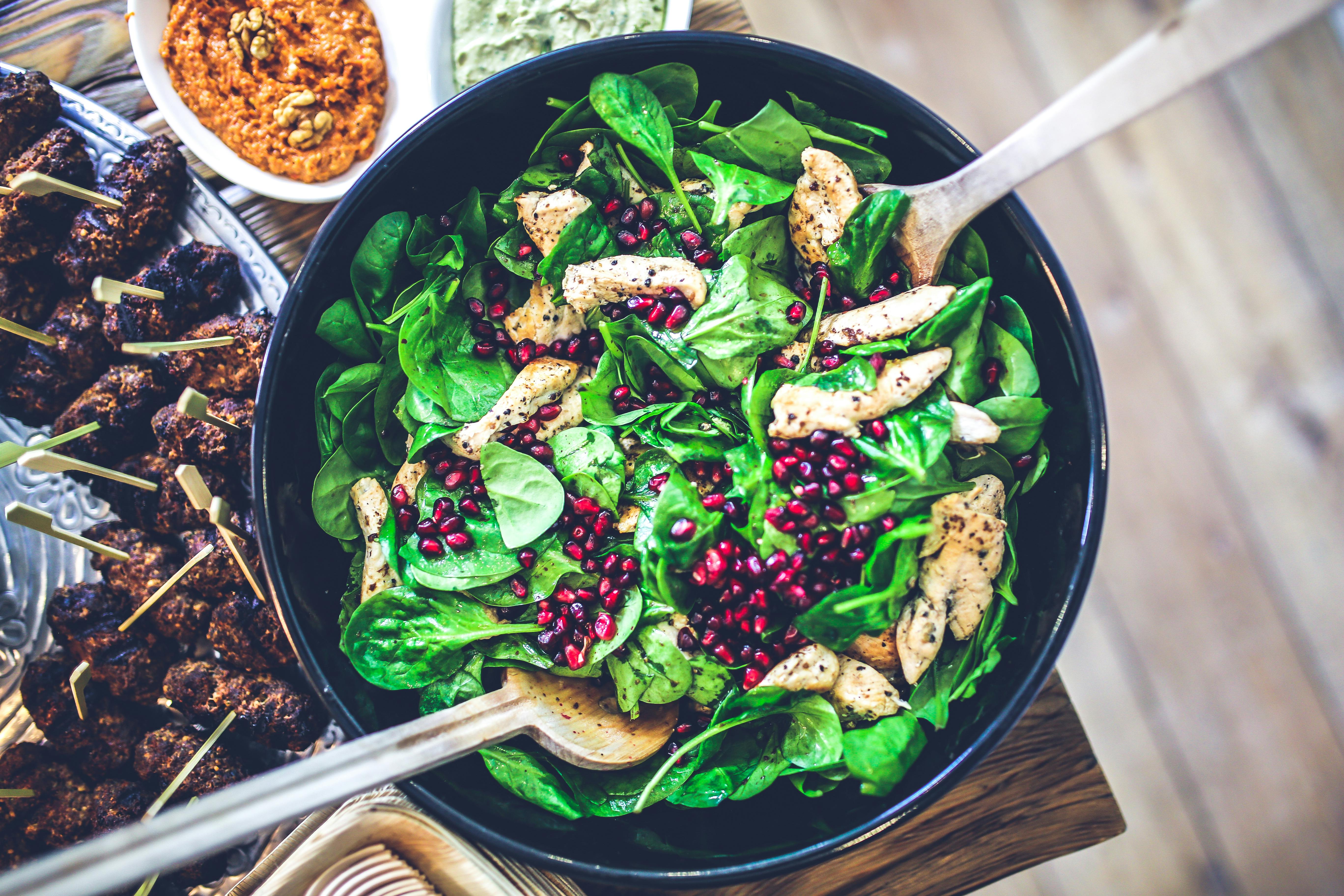
Plenty of startups have spotted the business. We have written about the ones that kept appearing over the past two years, stressing fresh ingredients, scientific ratios and tight calorie counts, though what they sell mostly comes down to salad and chicken breast under the name "healthy meal" or "fat-loss meal." Soylent, born in Silicon Valley, is arguably the star startup of the meal-replacement business; besides its powder it now makes energy bars, and it has spread from Silicon Valley to several large American cities. China has no shortage of imitators, Ruofan being the most typical. And DietSensor, a French startup, has already launched Scio, a device that scans food and reads its calories.
Against that, the objection that "this takes all the fun out of eating" carries no weight.
Going vegetarian, and leaning on meat substitutes
Ten years ago Britain had only 150,000 vegetarians; now there are more than 540,000, a rise of 350%. In the United States, 7.3 million people are already vegetarian, with another 22.8 million eating vegetarian-leaning diets.
Leave aside the values behind vegetarianism: more and more people want to eat less meat — or to eat lighter and healthier. So meat substitutes keep multiplying.
General Mills, Tyson and Bill Gates have all invested in Beyond Meat, a startup that builds "meat" out of pea protein, canola oil, coconut oil and other ingredients; its Beyond Burger is already sold at Whole Foods and at the vegetarian fast-food chain Veggie Grill. Memphis Meats, which grows meat from animal cells in a lab, has raised $3.05 million since it was founded last year.
The audience is still small, but these companies are growing fast: sales at related businesses reached $4.9 billion between June last year and June this year, far outpacing the food industry as a whole.
Drinks are going plant-based too
The obvious case is coconut water, which keeps getting more popular — its total sales rose 27% year-on-year last year. Consumers are now turning to other plant-based drinks: aloe water, maple water, cactus water, artichoke water.
They are more natural, and besides quenching thirst they are said to do more — aloe water supposedly helps digestion and weight loss, and cactus water contains antioxidants and electrolytes.
Plant milk is popular as well. In recent years WhiteWave, which owns America's best-selling soy milk brand, has posted double-digit sales growth.
And according to the food trends published by the organic grocer Whole Foods, plant-based tonics from alternative medicine will be very popular; the most popular right now include kava, tulsi (an Indian herb), turmeric, apple cider vinegar, medicinal mushrooms (ginseng and chaga among them) and herbs (maca, Indian ginseng).
Functional "superfoods" are just as popular
Think of them as plant tonics, upgraded. Every so often some food becomes an internet-famous ingredient on social media — lemongrass most recently, popular not only for the flavor and color it adds but because it is rich in vitamins and in minerals the body needs, potassium, calcium and iron among them.
Sum up the "superfoods" that have had their moment and nearly all of them seem to promise a cure for everything: avocados are eaten because the fat they contain is the kind that's good for you; quinoa offers all-round nutrition, rich in protein, fat and a range of vitamins and minerals; turmeric is said to help digestion, ease joint pain and lower the risk of cancer.
Nobody much cares whether any of it works. What people want to know is how to slip these "superfoods" neatly into their own menu, and eat a meal that is both tasty and "healthy."
Caring what you eat — and what the animals you eat ate
Eating plants yourself isn't enough; you also want the meat you eat to come from poultry and livestock raised on grass. Consumers increasingly buy meat and dairy from grass-fed animals: milk, eggs, yogurt, butter and cheese, snacks like beef jerky, even protein powder.
People have also begun to care about these animals' "lifestyle" — which is why free-range chickens and eggs, and grass-fed rather than grain-fed beef, keep gaining ground. This connects to animal welfare, and more and more consumers pass moral judgment on a company when they buy from it. A Mintel survey found that 70% of Americans often weigh a company's ethics while shopping, and 56% will stop buying from a company once they find ethical problems in how it operates.
But it is also tied to what consumers believe is good for their own health. Antibiotic-free meat is the clearest example. The idea that antibiotics shouldn't be overused has sunk in, so consumers don't want antibiotics in the meat they eat, and some of the largest meat producers, Tyson and Perdue among them, have already begun cutting back or dropping them.
Mini packs, to take the guilt away
QDaily Research Lab ran a survey this year asking what people subtract when it comes to eating. Of 5,035 votes, the most popular answer, with 19.3%, was "I like small-packaged food." It creates the illusion of taking in fewer calories — which is really a trick by the big companies.
Coca-Cola makes no secret of what small bottles do for it: small bottles of Fanta and Sprite both grew at double-digit rates this year. Small packaging has even become the company's lifeline. Since it launched last year, Coca-Cola's profit margin in North America has climbed back, and by the third quarter of this year the company's results had stopped falling and showed signs of recovery. The head of the North America division called it "a big bet the company is making right now."
Consumers eat more because they feel less guilty; companies cut costs and take higher profits.
Richer textures, as long as it's the "healthy-food medley" kind
If you follow food bloggers on social media, you have probably noticed how much they like posting good-looking food, and a medley is the easy way to get that look. Take two breakfasts that have caught on in the U.S. lately: "overnight oats," yogurt and oats mixed with strawberries, raspberries and nuts; and smoothie bowls scattered with sliced fruit and cereal. A Mintel report says the number of smoothie varieties worldwide rose 23% in 2015, eating further into the pure-juice market.
The typical consumer is young and health-conscious: a female college student, or a woman new to work. It is quick to make, easy to carry and full of texture, and in some cases can stand in for a meal; its ingredients are mostly fruit, yogurt and other foods everyone agrees are healthy; and it looks good. No wonder it caught on.
More convenient than convenient
Products that save people trouble are always popular, but consumers today are probably lazier than they used to be. Cereal once sold on convenience; now 39% of American millennials think washing the bowl afterwards is too much bother.
So capsule machines caught on. Take Flatev, a capsule machine that hit its crowdfunding target 29 days early this year: it could not be simpler to use. Drop a "corn" capsule into the machine, press the matching button, wait a dozen seconds or so, and out comes a corn tortilla.
The rise of food delivery in China follows the same logic. Three meals a day, afternoon tea, late-night snacks — we want all of it brought to the door. According to an iResearch report, the main third-party delivery platforms reached 17.05 million monthly users in April this year. China's food-delivery market already passed 230 billion yuan in 2015, 7.4% of all restaurant spending, and that share is expected to climb further, to 18.4% by 2018.
"Organic" may be the most valuable IP in food right now — though to most people it just means "expensive"
That food with an organic label is a cut above seems to be a consensus among consumers everywhere.
A report last year from the market research firm TechSci Research forecasts that global organic food sales will grow 16% a year on average over the next five years.
You can tell how important the label is from how eagerly the big companies have been buying small organic brands in recent years. In 2014, General Mills paid $820 million for the organic food brand Annie's. In July this year, Danone spent $10.4 billion on WhiteWave, an organic drinks company whose soy milk and almond milk sales have more than tripled since 2012. Last month, PepsiCo paid $200 million for KeVita, an organic beverage company with revenue of only $60 million.
Whole Foods, which led America's organic food trend, once had a glorious run of its own: between 2010 and 2013 its same-store sales grew 7% or more, and its 2014 profit was three times its 2007 profit.
For Chinese consumers, who care more and more about the quality of their lives, "organic/green" has become the first standard for judging whether food is safe; 38% put it among their top three criteria — "even though China has no reliable organic certification at present."
The "organic" label is not cheap. A few examples: organic eggs, milk and salad cost 82%, 72% and 60% more than their non-organic counterparts.
Not everyone can afford this trend — 15% of Americans avoid organic food on purpose because it costs too much. Once established chains like Walmart and Costco joined the organic fight, though, organic food got a little cheaper. Even Whole Foods was forced to open 365, a lower-priced organic sub-brand, to draw younger shoppers with smaller incomes.
Americans chase local, Chinese consumers prefer imported
F2T is the abbreviation for the phrase the American food industry mentions most often right now: Farm to Table. Chefs don't dare approach investors without writing it into their plans. More and more Americans support local food, and don't mind paying a bit more for it — half of consumers say they would pay 10% more for local food, and a third would pay 25% more.
Their reasoning: local food travels a shorter distance and is processed less, so it tastes better, keeps more of its nutrients and has more character — and it cuts the pollution of long-distance transport and supports local farmers.
A fair number of companies have gained from this. Sweetgreen, a salad chain happy to advertise its support for local farms and ranches, has won over customers who back local food.
Chinese consumers go the other way; food safety comes first. Mother-and-baby products are the clearest case: the total value of infant formula imported into China rose 25% year-on-year in the first half of this year.
Imported snacks are popular too. More and more foreign supermarkets and brands are moving onto Chinese e-commerce platforms to sell them. CBNData says snacks make up 40% of imported food sold online, and imported snacks grew more than 80% a year on average between 2012 and 2015. On Taobao that has fed a long tail of demand for daigou buying agents bringing in snacks from Japan, South Korea and elsewhere.
The 150 live cattle flown from Australia to Chongqing at the end of last year may well mean a new market is opening.
Americans are obsessed with supplements, Chinese consumers with health tonics
Whether the goal is building muscle or keeping weight down, protein enjoys boundless prestige in the American idea of a sound diet. Nielsen data shows that between October 2015 and October 2016, sales of food claiming to be a "good source of protein" reached $3.8 billion, up 11.6% year-on-year. Protein-related categories — meat, energy bars, nuts, plant milk, Greek yogurt — all did well.
Protein supplements have found a broad market among young people and gym-goers. Research from Euromonitor International projects that by 2020, sales of sports-nutrition protein powder and related products in the United States alone will reach $9 billion, $2.4 billion more than in 2015.
Eleanor Dwyer, a research analyst at Euromonitor International, said: "People think carbohydrates are the enemy and protein is the friend, and any health worries that come out of that are overblown."
Next to the American obsession with protein, Chinese consumers are keener on health tonics.
Collagen, vitamins, enzymes, liver-protection pills — products for different needs are chased by different groups. Starting in 2013, China's health-supplement industry entered a period of fast growth: sales revenue across the industry climbed from 113 billion yuan to 157.9 billion yuan, and passed 190 billion yuan in 2014.
Behind all of it is the same worry about health.
Finally, taste... wait, is there a single definition of "delicious"?
As you can see, almost nothing above has much to do with taste itself. Amid all this change, the definition of "delicious" seems to have grown much broader than it used to be — and personal taste, which looks like pure free choice, is in fact always shaped by the products available, by what a person is after in food and drink and, inevitably, by the pull of a trend.
This may be another meaning of "consumption upgrading": less instinctive appetite, more control and self-restraint. But consumption upgrading isn't only consumers willing to spend more to meet their own needs. It pulls at every commercial element of society — companies (more money and more people poured in), policy (the U.S. FDA, for one, is rewriting its definition of "healthy"), public opinion (the health craze keeps intensifying) — a change across the board.
This is what a younger generation of consumers wants, and these trends may well keep spreading.
Translated from the original QDaily article. Original publication date retained.