

These Young People Are Obsessed With the “Androgynous Look.” What Are They After?
Chasing an androgynous style doesn't make you look cool. Knowing what you want does.
Chasing an androgynous style doesn't make you look cool. Knowing what you want does.
Remi has 2,540 followers on Instagram. She also started a WeChat group called “Vintage Androgynous,” which already has more than 50 members.
Remi wears her hair in mid-length curls and never uses any lipstick but true red. Beyond that, there is almost nothing conventionally feminine in the way she dresses — on her Instagram, which she updates whenever she feels like it, workwear, indigo, and denim turn up most often. Like the “homme” in her handle, she describes her own character as “boyish”: “blunt, easygoing.” The women she is close to tend to be blunt as well. She has no patience for people who are “wishy-washy, affected, or simpering.”
Most of the people in that WeChat group share her taste for the “androgynous look,” right down to the brands: FREITAG bags cut from discarded truck tarpaulins, the Australian skincare brand Aesop, Converse and the Japanese canvas shoe brand Shoes Like Pottery, MARGARET HOWELL, Britain's finest example of androgynous style, and the American workwear label Engineered Garments. Even their music matches — they all like post-rock, which carries “no superfluous tone colors.”
Androgyny, Remi says, has nothing to do with sexual orientation. It has to do with character.

Gao Fei, a young woman in Beijing, is after androgyny too, but unlike Remi she believes in logos and buys luxury goods on sale. Day to day she buys Zara basics: black, white, and gray, and trousers. She tried men's clothing and gave up, because “my build isn't right for it.”
The biggest benefit of the androgynous look, Gao Fei says, is that it strengthens her sense of being “professional” — modern and capable, not traditional or delicate. “The traditional image of a woman is something I intend to resist to the end,” she says. Gao Fei does administrative work at a company in Beijing. She has no boyfriend, and her answer to the blind dates her parents arrange is to “stand up and go back to my room.”
Because she is “dark-skinned, not thin enough, with ordinary features,” Gao Fei feels she has no advantage in “feminine charm.” But over the past two years she has gotten the hang of looking sharp, and people have started calling her pretty.
She has friends chasing the opposite look, she says — one of them “makes us call her Sweetie” — but “on her it works.”
Who says boys can only dress like boys, and girls like girls?
People used to assume they could read a person's sex off their appearance. As the psychologist Sigmund Freud put it: “When you meet a human being, the first distinction you make is ‘male or female?' and you are accustomed to making the distinction with unhesitating certainty.”
If Freud were alive today, he would find plenty of scenes worth hesitating over.
At Milan Fashion Week's fall/winter shows this February, Gucci for the first time ever sent male and female models down the same runway in a mixed show. Gucci's revenue grew 12.7% last year. Closer to everyday life, the fast-fashion giant Zara added an “Ungendered” shopping category to its website.


The word “unisex” was coined back in the 1960s, in protest against the rigid gender stereotypes left over from the war. By 2014 a trend called normcore had pulled young people's taste toward the plain and the minimal, and over the next two years that turned into a “genderless” wave that stopped chasing obvious markers of sex — a term you can read either as women picking men's clothes with the gender signals turned down, or as men taking to pink and bold prints. In short, dressing the way Gucci's models now do.
The androgynous look was never worth making a fuss over. As Humberto Leon, co-founder of the New York streetwear store Opening Ceremony, put it: “It's being embraced more broadly.”


To see how deep this trend has sunk into ordinary life, QDaily Research Lab once ran a survey: “What cross-gender purchases have you made?”
Of the 13,191 responses we got, plenty came from women who love men's clothing — “Men's clothes are so much better made! None of that frivolous nonsense,” “simpler and in better taste,” “every time I go shopping I drift into the men's section without noticing; all that pink-and-blue women's clothing hurts my eyes” — even as they complained that men's clothes are “too wide in the shoulders to wear” or “just too big.” That is also why a boyfriend's shirt has become so many women's favorite pajamas or loungewear. Patterned socks, meanwhile, have become the “fashion statement” that men in suits and ties let slip almost without meaning to. And with perfume, bags, and shoes, the things made for the other sex are often simply better to use.
In the era when “masculinity” and “femininity” were the reigning standards of taste, splitting the market by sex served what consumers wanted inside: using only men's products was the perfect way to signal manliness, and low-saturation grays, darks, and blacks became close to standard issue for men. Products classed as women's, by contrast, meant “delicate, slender, elegant.”
Today the selling points stereotyped as “little-girl taste” — candy colors, princess style, Hello Kitty — have been more or less dropped by consumers. Not every woman likes these things, and women are not the only ones allowed to like them.
At the wider level of consumption, it is less that the androgynous look is in fashion than that women buying “men's products” and men buying “women's products” shows how far brands' positioning has fallen behind the shift in these customers' taste.
Are men more anxious about the androgynous look than women?
Many people take the androgynous look to mean a woman looking more like a man. Run it the other way and the reactions get complicated.
“There's no such thing as ‘especially masculine clothing' for men in the first place,” Remi said when we talked about androgyny over the phone. When the subject comes up, she thinks, what men are usually afraid of is being called a sissy.
In mass consumption, men's fashion has long been tied to traditional masculinity, and the fashion world has always wanted to break that hold. During the New Romantic movement of the 1980s, Jean-Paul Gaultier, the “bad boy of Paris,” put male models in skirts, saying: “If a man's value lies in the power and money he holds, then why can't his value lie in his sexuality too?” Performers like Leslie Cheung often pushed at the gender line of clothing on stage as well.

If public opinion has loosened at all, it is that the people willing to do this are no longer only celebrities and fashion insiders. Miyazaki Sogen is one of them. He says he “doesn't mind at all” being called a sissy. What he minds is “wearing the same clothes as other guys.” “What I hate most is being told I'm the same as everyone else.”
Miyazaki Sogen hosts A Gentleman's Minute or So (《绅士大概一分钟》), a variety show on Bilibili. A group of Japanese students in China started the short-video program in 2014, covering all kinds of pop-culture topics from Japan and China. He has discussed the androgynous look on the show, picking out gender-crossing outfits for other male guests.

When we met him in Jing'an, Shanghai, he had curly hair parted in the middle, a long black cardigan, a decorative orange belt on his trousers, and a maroon clutch in his hand.
“This, and this, are both women's clothing,” he said, pointing at what he had on. He is 29, and started experimenting with androgynous dressing about six years ago. At Uniqlo or Zara he shops the women's section, which has more to choose from. He likes Japanese labels that sit “between fast fashion and high fashion.” When he wears trousers from SOU・SOU, the Kyoto brand that draws on kimono design, people often take them for a skirt.
A Gentleman's Minute or So draws about 300,000 views an episode on Bilibili, and Miyazaki Sogen has 210,000 followers on Weibo. He does not consider himself a celebrity, but says, “in daily life or in the videos, I'm the slightly cooler kind of character.”
Six years ago, still at school in his home prefecture of Toyama, Japan, he wore the clothes his parents bought him and kept his hair short: “looked completely ordinary.” Now people tag him on Weibo to say he resembles Joe Odagiri, the well-known actor who can “pull off any difficult look.” He replied with a string of happy and applauding emoji.

In Tokyo, Miyazaki Sogen reads the fashion magazine MEN'S NON-NO regularly. In Japan, he says, every age group and every region has its own trends, and “Harajuku style,” which carries an androgynous label, is one of them.
In the 1980s, fashion-conscious Japanese youth shifted their attention from European and American labels to homegrown designers who were just emerging, Yohji Yamamoto and Rei Kawakubo above all. In the 1990s, the Harajuku district in Shibuya became the gathering ground for street brands. Young people followed visual-kei idols and loved loud, attention-grabbing colors.

Over the past 20 years, Miyazaki Sogen says, the Japanese have come to accept the idea of unisex. What is expected of men has changed as well. Japanese idol culture has taken to the “salt-type man,” who should be comfortable, fresh, and easy as a spring breeze — the opposite of the attention-seeking “soy-sauce type.” Joe Odagiri is one of the salt type's models.

Since coming to China, Miyazaki Sogen has seen people dressing androgynously here too, but it has not hardened into a named trend the way Harajuku style did. “If a man in China wears androgynous clothes, I'm not sure what you'd file it under. It's still that vague idea of being a sissy.”
“The bar for it is probably fairly high,” he said. Plenty of people still dislike the way he puts clothes together. The guy he dressed on the show, in the end, did not take his advice. “It wasn't right for him.”
The feminine qualities he likes are androgynous as well — the short-haired rock singer Kaela Kimura, for instance. He admires people like her: however much they change on the outside, their character stays fixed.

Still, as a straight man, right after saying he doesn't mind being called a sissy, Miyazaki Sogen added: “Because I'm not gay or bisexual or anything like that. I just treat these clothes as a means.”
“When I wear women's clothes, I'm running a social experiment”
Suji Yan, a 21-year-old programmer, dresses closer to “girl.” Before a rock concert he puts a choker around his neck, checks his eyeliner, puts on lipstick, then picks out a wig depending on his mood.


The first time Suji Yan wore women's clothes was at a comic convention, when he was in high school in Shanghai. He cosplayed Shiki Ryougi, the heroine of The Garden of Sinners who can “see the flaws and the lines of death in living things.” He counts her and Motoko Kusanagi, the intelligence section chief in Ghost in the Shell, as his favorite characters, because they “rise above the idea of gender in the first place.”
Besides liking female characters, he judged that he makes a better girl. Suji Yan has soft features and a slim, narrow frame. At the convention some people came over to take photos with him and, without hearing him speak, assumed he was a girl.
Since then he has often dressed soft or dressed rock, at conventions and in ordinary life. By his account he never had much to hesitate over and never ran into any obstacles. When he meets classmates on the subway, they say hello exactly as they always did.
Then again, the people who know Suji Yan best may simply be used to his stunts by now. In high school he did “a lot of strange things,” such as painting a large female nude on the sports field with a mop and buckets of paint. He said he wanted to give everyone an “art education,” but nobody paid him any attention; only a teacher from the discipline squad noticed and ordered him to wipe it off at once. “I could have painted a male nude,” he explained, “but nothing is as good to paint as a woman.”
Teachers and parents generally left Suji Yan alone. His decent grades bought him room to be free. He spent his time on his hobbies: besides anime, comics, and games, he likes science fiction, Isaac Asimov's Foundation among it. He says he worships no real-life idols; the characters he loves are mostly invented.

Suji Yan left China for university — first, in 2014, to the University of Illinois at Urbana-Champaign to study computer science, then, in 2015, to the University of Tokyo.
Tokyo, he found, is the place where he can wear women's clothes with the least fuss. He mostly wears Japanese brands. He took an elective on clothing and fashion at university and wore women's clothes to most of the classes, treating it as a kind of social movement.
Suji Yan is in the habit of using the theory he has learned to define what he does and what he sees around him. On his own trade, he says the internet has produced a body of workers who can “work anywhere in the world,” letting them rise fast as a “new class” and breaking the constraints of class rank, dress codes included. On the social meaning of wearing women's clothes, he brings up the “gender neutral” idea in “postmodern gender theory.”
The feminist Shulamith Firestone first proposed “gender neutrality” in The Dialectic of Sex in the 1970s. In her hypothesis about where thinking was headed, assisted-reproduction technology would free humanity from the constraints of biological sex and hand it the full power to choose.

Last year Suji Yan interned at an online education company in Zhongguancun, Beijing, and was active on Zhihu and Weibo under the label “the programmer who wears women's clothes.” He found other male programmers doing the same, some styling themselves as anime lolis. He tries to raise this to “the level of theory” as well, seeing it as a way the “new class” moves.
Suji Yan has a girlfriend, and he is always surrounded by LGBT friends. He is rather proud of that: “They can really relax around me.” He is currently on leave from university, running a short-video startup between Tokyo and Los Angeles. When he hires, he says, sexual minorities get priority.
Ever since David Bowie, people have seen no shortage of rebels who blurred the line between male and female. But against pop culture's gimmicks, that kind of boldness and clarity is rare in real life. When we got in touch online with people who like wearing women's clothes, Suji Yan answered most eagerly of all. On one hand, he said, “you should look at how the kids born after 2000 think about gender.” On the other, he noted: “Someone like me, who came through completely unharmed, is rare.”

When LGBT people talk about the androgynous look, what are they talking about?
We met Guoguo at her office in Beijing. She founded the app GOLA Handsome Girl Trend Community. Most of its 700,000 users, she says, are lesbians. Open the home page and the first thing you see is photos of “handsome Ts.”

Guoguo is a T herself. She wears a gray hoodie, short hair, sneakers. “I don't think I dress androgynously,” she says. “I dress like a man.”
Guoguo grew up in a small county town. For a long time she had no idea what “lala,” the Chinese slang word for lesbian, meant. Nobody around her mentioned homosexuality. But from kindergarten on she instinctively “liked girls” and “felt awful in a skirt.” She was loud and never short of friends.
She came to Beijing for university and learned about the lala world through online forums like Baidu Tieba. When she went into business after graduating, she wanted to do something for these women. She had studied advertising, and in college she and an older classmate started a marketing company; in one year her share came to 200,000 yuan. It also left her insufferable for a while, until her girlfriend talked her down.
GOLA runs a lot of outfit content. But Guoguo says she doesn't understand fashion herself. She called in Wuyi, the content editor she has worked with for two years, to join the interview. Wuyi studied fashion marketing in Britain and is a straight woman in long hair and long skirts. She says the idea of androgyny interests her a great deal.
Whenever Guoguo raises something, Wuyi adds a few words. The T world has its own dress code, Guoguo says: hot streetwear items, the Dr. Martens boots G-Dragon made popular. They want a flat body line and usually bind their chests. And a T, Wuyi says, has to think about her girlfriend's opinion too.

Guoguo's girlfriend was straight to begin with and was simply drawn to her, which made things more “tangled,” she says. “Compared with women who were born gay, I prefer pure straight women — pretty and obedient,” Guoguo says of her own standard for a partner. Wuyi knocked the explanation down on the spot: “I think it's low self-esteem.”
Wuyi mentions that when they ran content on the app about “Facebook's 56 genders,” some users pushed back: they were confused already, and this made them more confused. The two have met people who went through with gender-reassignment surgery, which is “frightening,” because of what it costs their health.
How you dress has nothing to do with gender, and everything to do with how you define yourself
Remi did not know what she wanted to wear from the start. She wore the skirts her mother picked out, and went along with the crowd on office wear when she was job-hunting, until after graduation she went to work in the Czech Republic. There she took stock of the life she had lived so far and worked out for the first time what work suited her, and what clothes suited her.
“Clothing is a way of expressing yourself,” Remi says. Once she had settled a lot of questions for herself, “the way I express myself got clearer.”
When she sees some old friends, she dislikes the “uncertain, complaining state” a few of them are in. It means, she says, “not knowing what you actually want.” “Drifting is fine too, but you have to know that drifting is what you're choosing.”
Remi is not alone. Within the subject of appearance, everyone we interviewed described going from vague to certain in the relationship between other people and the self.
Jo Paoletti, a well-known gender scholar and professor at the University of Maryland, wrote in her 2015 book Sex and Unisex: Fashion, Feminism, and the Sexual Revolution that over the past 100 years women have broken, with progress no one can dispute, out of the traditional world's neat-hemmed “lady.” Women got their reward: women's clothing now covers nearly every category that once belonged to men. A typical androgynous look includes T-shirts, hoodies, jeans, and suits.
Paoletti also points out that a large part of why the androgynous look keeps gaining force today is that feminism still has work to do.
We can end this article with an example that looks unrelated to androgyny.
Feifei, who lives in Qingdao, went from childhood tomboy to “Japanese-style soft girl.” For a long stretch she was used to doing what other people thought best. At school, the uniform and the unending run of exams kept everyone in a state of “compulsory androgyny.” In her first year of university, “a roommate who loved dressing up” stopped her wearing baggy tracksuits. That was when she began to think seriously about what she wanted, though she would not really understand it until she started working and could support herself.
She started changing her style. “People see what you wear and decide that's how you are. Put on a skirt out of nowhere and they're shocked. But keep wearing skirts and they get used to it.” As she grew happier, she also seemed to be let off a hook: “I used to think I dressed for other people to look at. I don't think that anymore.”
Behind every choice, the androgynous look included, the motive comes down to that.
(Remi is a pseudonym.)
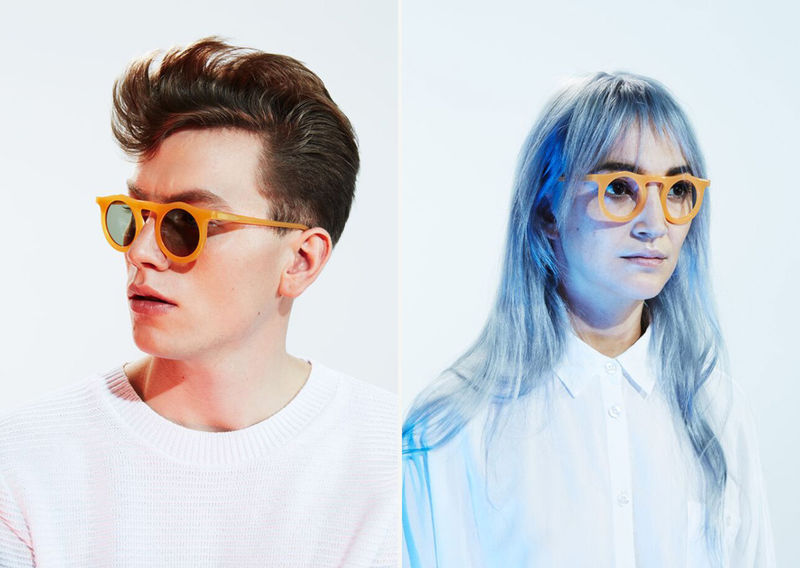
Cover image from trendhunterstatic and bethnals

Translated from the original QDaily article. Original publication date retained.