

Peter Chan on *This Is Not What I Expected*, *Soul Mate*, and a Market Held Hostage by "Small-Town Youth" Taste
Both films were incubated at We Pictures, the company he founded — and that is this director's answer to a changing market.
Both films were incubated at We Pictures, the company he founded — and that is this director's answer to a changing market.
This May Day holiday brought two romances. One is a familiar face: the third installment of Pang Ho-cheung's Love in a Puff series. The other is This Is Not What I Expected, from the first-time director Derek Hui.
Both are commercial romances selling "romance," but their moods are not the same. Pang Ho-cheung casts Miriam Yeung and Shawn Yue as an urban couple, and what he has always been good at is people sticking together in the ordinary world, and the small cleverness of grown-ups.
This Is Not What I Expected's poster, by contrast, is all bright, innocent color. Its leads, Takeshi Kaneshiro and Zhou Dongyu, play a "chef girl" and an "eccentric CEO" — characters who exist only in Mary Sue fantasy. Through the whole promotional campaign, one word was pulled out and held up: "sweet."

"A little too sweet to be believable," Peter Chan said.
As the film's producer, Chan spoke first at the Beijing premiere press conference on April 23. He said straight away that he could not make a film this sweet himself — Comrades: Almost a Love Story only knew how to tell a story of bitterness. As for Derek Hui — he gestured at the young director beside him, who had also been his editor for 11 years — "the director very gently turned it into an extremely sweet romance… as long as the director believes it, even something fake can become real."
The rest of the press conference was given over to games between Derek Hui and the cast; a cotton-candy machine was even wheeled onto the stage. Still, there was no denying that the interest some of the media and the audience in the room had in this new film had mostly been stirred up by Chan.
Mainland audiences' sense of Peter Chan begins with his own films as a director. Chan, 54 this year, entered the Hong Kong film industry in the 1980s, directed his debut, Alan and Eric: Between Hello and Goodbye, in 1991, and has directed 17 films since, among them He's a Woman, She's a Man (1994), Comrades: Almost a Love Story (1996), Perhaps Love (2005), The Warlords (2007), American Dreams in China (2013) and Dearest (2014).
Among the many Hong Kong directors who have gone north to the mainland, Chan's box-office record is not the most glamorous — his highest is American Dreams in China, at 550 million yuan — but he is one of the few who has held on to his reputation inside commercial film. Nearly all his films score above 7 on Douban. The most recent, Dearest, was one of the best-reviewed Chinese-language films of its year, at 8.3.
For the past two years, though, Chan has stood behind newcomers. Before This Is Not What I Expected, he produced another romance in 2016, Soul Mate, directed by Derek Tsang. It told, with real delicacy, the story of two girls who are each other's opposite in life; despite a poor screen allocation, its youth and intimacy set audiences arguing, and it ended up taking 167 million yuan. Zhou Dongyu and Ma Sichun shared Best Actress at the Golden Horse Awards, and Derek Tsang was nominated for Best Director at both the Golden Horse and the Hong Kong Film Awards.
Beyond directing, Chan has in fact produced close to 30 films. He got his start by founding the United Filmmakers Organization (UFO) with Eric Tsang, where he was cast as an administrative talent along the lines of Nansun Shi, Tsui Hark's producing partner, and worked on a string of Hong Kong commercial pictures. After 2000 he set up Applause Pictures, aimed at the Asian market, mainly Southeast Asia and South Korea, and drove and produced films including Samson Chiu's Golden Chicken, the Christy Chung vehicle Jan Dara, the Lee Young-ae vehicle One Fine Spring Day, and the Pang brothers' horror film The Eye. After Perhaps Love carried him into the mainland market, his best-known producing credit was Teddy Chan's 2009 Bodyguards and Assassins.
The job of "producer" in this sense began in Hong Kong's film and television industry. It means the person among a film's producers who handles a wide range of concrete matters and, above all, protects the creative direction. Against Hollywood's job titles, the role is roughly an executive producer.
In the mainland market in recent years, the producer credit has turned up on many film companies' tentpole projects. Because some of those films turned out to be borrowing a big name and little else, audiences have grown wary of that kind of promotion.
On the other hand, in some films the producer is also the project's instigator and investor, and holds the biggest say over the production. The Taiwanese director Chen Kuo-fu, for example, owns Kung Fu Pictures and has produced Wuershan's Mojin: The Lost Legend, Xiao Yang's Young Style (《少年班》) and Yang Qing's Chongqing Hot Pot. Another mainland director audiences have taken to, Ning Hao, set up Bad Monkey Pictures and then announced he would produce work by new directors, including Lu Yang's Brotherhood of Blades II and Wen Muye's The Indian God of Medicine (《印度药神》).
Chan's producing on This Is Not What I Expected and Soul Mate works the same way: his company, We Pictures, is both the production company and one of the investors.
In an interview with QDaily, Chan described the two romances as something like twins. They share almost the same crew. Besides Chan and Jojo Hui, his partner at We Pictures, as producers, Chan met two young screenwriters, Li Yuan and Xu Yimeng, while preparing This Is Not What I Expected, and brought them onto Soul Mate, which went into production first; and it was through Soul Mate that he met Zhou Dongyu, whom he then cast in This Is Not What I Expected.
Derek Hui, the director of This Is Not What I Expected, was also the editor of Soul Mate.
Picking two romance projects at the same time "wasn't a coincidence," Chan said. The reason was purely a calculation about popular genres: "because after we finished Dearest, the market was flooded with these romance IPs, all of them web novels."
They first acquired the rights to the source books in late 2014. Soul Mate comes from a short story of the same name by Anni Baobei, who now writes as Qing Shan; This Is Not What I Expected is likewise adapted from a romance novel, Finally I've Waited for You (《终于等到你》), by the web novelist Lanbaise.
In mid-2014, when Alibaba acquired ChinaVision Media Group, it signed separate deals giving it first refusal on investment in five films each with Wong Kar-wai, Stephen Chow and Chan. Chan then looked through a number of properties Alibaba held the rights to, including this year's film version of Once Upon a Time, and settled on two.
He hesitated for a while, though. He said that honestly he was not especially fond of either book — "it wasn't the kind of thing where you read it once and feel you absolutely have to make it into a film."
The seed of Soul Mate is two close friends who fall for the same boy and spend the rest of the story loving and destroying each other. The outline of This Is Not What I Expected's source novel, Finally I've Waited for You, boils down to the hollow formula of the sweet innocent and the domineering CEO — a cliché even among the many works of the girlish-fantasy genre.
The direct consequence of that kind of cliché, Chan said, is that it looks fake, especially in how it draws the "upper class": "Think about it — someone who isn't middle class writing about the middle class, you'll feel it's especially fake. You know what I mean? Especially fake."
"I think IP is only a starting point," Chan said. "Once you have it, you still have to rewrite the whole thing." He had been blunt at the start of the interview about wanting commercial returns, but once the talk got down to the level of the work itself, his answer was just as blunt: "The truth is, filmmaking is itself a commercial act, but inside that commercial act there has to be something artistic, because to make it well you have to make it personal — if you don't make it personal, you won't make it well either."
Chan went to an English-language international school as a boy and studied history at UCLA. What he liked best was always the Hollywood genre picture that sits between commerce and art. As a director he made his name with romance: Comrades: Almost a Love Story, He's a Woman, She's a Man and Perhaps Love all carry the tone of city romance. His later films — The Warlords, Dearest, American Dreams in China — tell of people scattered by a great age, and of the realistic, pessimistic, still romantic feelings of small people caught up in it. Which is why peers and the press have long pinned a "middle-class taste" label on him.
Compared with his own directing, though, Chan holds the films he produces more loosely. As far back as Bodyguards and Assassins, in an interview with Mtime, he said: "When you're the director you need a lot, a lot of tangled passion. The workload is the same, but as a producer you aren't personal about it — you just look at what the market needs, then help the director get there."
The script adaptations for Soul Mate and This Is Not What I Expected each took about a year, and in the end the structure and the point of both had, to a degree, broken out of the limits of the books.
Soul Mate weakens the male lead and lets July and Ansheng trade lives, as if two sides of one girl were being magnified, the course of a life reversing again and again.
This Is Not What I Expected never escapes the old Mary Sue frame, but the film scored 7.3 overall, enough to satisfy the audience that likes this sort of thing. One fair-minded comment: "The film's characters and framework may be clichéd, but the direction a lot of the small details take isn't. (@JamesneeBA🐟)"
Jojo Hui, the films' other producer, told QDaily that when Soul Mate was in preparation it was "a fairly art-house project" — the cast was not especially starry and the budget was held to 30 million yuan. This Is Not What I Expected was "more commercial" — it used Takeshi Kaneshiro and Lin Chi-ling, shot in Shanghai, "and it was expensive."
Hui has worked on the production of nearly every film Chan has made. Their partnership goes back to the UFO days in the 1990s, almost 30 years now. Chan holds the big direction, from the market to the writing; everything specific after that falls to Hui.
The difference between the two films comes from the directors, Hui said: "Derek Tsang used to make a lot of fairly art-house films — he likes to dig a bit deeper, he's quieter. Derek Hui is just an open, cheerful person. He's got a lot of girlish romance in him. Only last night we were drinking and he cried. He said he was so happy, because he'd finally gotten to make a romance, to say the thing he himself likes, the thing he most wants to say."
Derek Tsang and Derek Hui are 37 and 35 this year, and each has spent a long stretch working toward his ambitions in film.
Tsang made Lover's Discourse in 2010 and was nominated for Best New Director at the Golden Horse Awards, but he is little known on the mainland. He is more often mentioned for acting in Pang Ho-cheung's sex comedy AV, and for being Eric Tsang's son.
At 21, Derek Tsang was introduced by his father to Chan's company as an intern. His first job as a script supervisor was on "Going Home," the segment of the horror anthology Three that won Leon Lai the Golden Horse Award for Best Actor.
Until Soul Mate, Tsang had never been widely recognized as a creator in his own right. Hui said he used to be someone tied in knots over his ideals: "I think back then he had one track in his head — he wanted to make art films, so he made rather artistic films… But by then Hong Kong's golden age had passed, and if you made an art film, even fewer people would put money in… I think he went through a lot of reflection. Everyone needs to grow, needs a lot of reflection. And he finally got to a day when he felt, well, maybe there's another form in which I can find the thing I want to say. That's part of growing up too."
Hui said the basis for picking new directors is this: "We've known each other for so many years — maybe you admire him, you encourage him, and of course there's the point where he matures. Sometimes in interviews people ask whether we'll go looking for more new directors. But you have to happen to be at that stage: you find him, and he's also just reached the point of being ready."
Derek Hui also came into the industry through Chan's company after graduating from university, and became an editor almost by accident, starting with The Warlords in 2007. Chan said asking him to direct was only a matter of time: "We know each other so well, right down to our values — this wasn't the first try. I'd asked him before, we just hadn't found the right project. The moment I raised this one, he liked it."
Hui told QDaily that he had always "badly wanted to talk to the audience" — "only as a director can you say what you want to say to the audience directly." He said he too went through a phase right after graduation of being "in such a hurry," "but slowly I stopped being in a hurry at all, and I really enjoyed doing urgent work while waiting for the right project to come along."
To Jojo Hui, Derek Hui and the young Peter Chan have a few things in common: "Oh, those two are really alike. Maybe it's because Derek Hui also came up through editing, so he'll often ask: will the audience actually understand this? Some of it comes from personality too, of course."
She added: "There's a great running joke at our company — if you want to know whether the audience will understand something, go ask Peter Chan… Back in the day we sometimes felt that if there's a bit you don't understand, that's fine, that's even good." (Unlike Chan's steady appetite for commercial film, she grew up at Hong Kong Baptist University studying under Lin Nien-tung, the martial-arts screenwriter and author of Chinese Film Aesthetics, watching art films like Battleship Potemkin.) "…But when you're making a commercial film, every single minute has to be clear, so they can follow you."
The two of them differ, she said: "When Peter Chan was young he was maybe a bit more willful. Derek Hui is better behaved."
Chan is the sort who keeps adjusting the script all through the shoot. While This Is Not What I Expected was filming, Derek Hui was on set and Chan was back at the company with the writers, revising, working out what better lines to put in.
They are careful about which projects they produce, Hui said: "Because some new directors don't want anyone controlling their work, and we're actually pretty strict about script control… So some new directors might not be up for it. I've met a lot of new directors who keep saying, my work, my work. Those directors may well be very talented; you just can't control them, and they'll do better on their own."
In an interview in Peter Chan: My Own Path, published by SDX Joint Publishing in 2012, Eric Tsang talked about Chan's "strengths and weaknesses": "I sometimes warn directors — if Peter Chan is your producer, he'll wring you dry, put you through hell. Can you take it? He's not like me, I'm very free-hand. That's his strength. Also, he mulls over every project for a long time; even on a day when the shoot isn't finished, he's still mulling… He takes in a lot of opinions and distills his own path out of them, and that's a strength too, and he sees far… His weakness is he's fairly stubborn. Hard to talk around."
Just as Chan is now to Derek Tsang and Derek Hui, Eric Tsang, ten years older, was once Chan's own mentor. What Chan taught him, Tsang said, was this: "If you focus on one thing, you can do it well — and that's the thing I'm worst at."
For three years now, Chan has had no new film of his own as director.
After Dearest he had two publicly known projects: a biopic of the tennis star Li Na, and a Republican-era mystery, The Murder at Jiangyuan Lane (《酱园弄杀夫案》), adapted from Jiang Feng's novel Overturning the Verdict (《翻案》).
By early this year The Murder at Jiangyuan Lane had signed several A-list actors and was ready to roll, but on the eve of the shoot Chan called it off. He did not think he could guarantee the box office, and this was not the moment for that kind of expensive art film; he also admitted that he himself still lacked a certain "creator's position" on it.
In the memoir section of My Own Path, Chan wrote: "I know a lot of people want me to go back and make another film like Comrades: Almost a Love Story, but the truth is I can't anymore. People change; you like different things at different ages. That's exactly why producing can be my profession while directing is only an interest — if I'm not interested in something, I simply can't make anything out of it. I'm certain my own place is to be a great producer. What I'm strongest at is definitely marketing and promotion."
Outside his best-known films, Chan has had his share of failures at the box office and with the critics, as director and as producer. The most disputed is Wu Xia (2011), sold with the look of a big-budget period epic. Some viewers said "Peter Chan isn't suited to making wuxia films," and the film lost money.
And in 2013, the same stretch in which Dearest was being praised, Cosmetology Diary (《整容日记》) — produced by We Pictures and directed by the screenwriter-turned-director Aubrey Lam — scored only 4.5 on Douban.
Zhang Ji, the screenwriter of Dearest, told Renwu magazine that the biggest reason for Chan's success on the mainland is that "he's still got a fix on himself" — "he just stands a little higher than the mass audience, thinks a little more, shoots a little more beautifully; as long as he respects himself, his films generally turn out well." And on the other side: "I think the reason it's hard for him is that the moment his films drift even slightly from what's truly his, they hit a big setback."
The film rights to both Soul Mate and This Is Not What I Expected belong to We Pictures. Chan's own distribution and promotion team handled the release and marketing for both. That brings the company revenue on one side, and on the other guarantees him enough say.
"Every time I talk about having a say it makes me sound very controlling," Chan said, "but I think the road led here naturally — it's also a choice that was made for me… There are many ways to earn a say. Sometimes it's your reputation, or your past record, and people give you face, they'll listen to what you say, but they won't necessarily do it. Only by putting your own money in, by fighting for enough say, do you feel this film is really yours."
On the talk show Behind the Headlines with Wentao in 2012, Chan said the films that best represent his values are Perhaps Love and American Dreams in China, and that the one that most reflects his private feelings "has to be American Dreams in China."
In that film, modeled on the three founders of New Oriental, Huang Xiaoming, Deng Chao and Tong Dawei act out the failures and successes of starting a business, and the friendship, love and falling-apart that came with it.
Across Chan's more than 30 years in film, similar situations have indeed kept recurring. After 2000, watching the Hong Kong market and then the Southeast Asian market decline one after the other, and seeing Zhang Yimou's Hero set a record of 250 million yuan in 2002, he realized "the mainland could be a market this big." Starting with Perhaps Love he began trying the co-production model, working in turn with mainland companies including Xingmei, China Film Group and Bona.
Chan wanted at one point to find a steady business partner, but after various problems with partners on The Warlords, Bodyguards and Assassins and others — around Bodyguards and Assassins he had co-founded Renren Pictures with Bona's Yu Dong, and the two later split — he came to the conclusion that "if you want to keep doing this, you have to face the problems yourself."
Chan's film dream was inherited from his father, Chen Tongmin. Chen was an overseas Chinese from Thailand who wrote screenplays in Hong Kong in the 1950s and raised his own money to shoot films in the 1970s, until at 53 he "gave up the dream of being a director" and took his wife and son back to Thailand.
Watching his father come back to Hong Kong again and again for the same dream — to direct — and be knocked down again and again shaped him, Chan said: "My father and I have a very good relationship. I became a director because he liked that I liked it; in other words, his failure was in a sense my failure too."
Chan said he is a person with "a very strong sense of crisis," and that everything he has today rests on exactly that. Film is a young person's industry, and a fiercely competitive one. "If I didn't lack a sense of security, I probably wouldn't have accomplished anything."
Later in 2017, another film Chan is producing, Sister Ling Raises Hell at Mengguifang (《铃姐大闹萌贵坊》), is due out within the year. The director has not been announced; the cast includes Sandra Ng, Zhang Yi and Jiao Junyan, plus one more hook — the internet celebrity Papi Jiang is one of the leads.
Chan also told QDaily that his next priority includes preparing a web series.
Peter Chan also talked about the market, about making films, and about himself
You've said you approach filmmaking from a commercial angle. Has that been true from the start until now?
From the very first film — the first was Alan and Eric: Between Hello and Goodbye — yes, it's always been that way.
But the thing is, mainland media, mainland filmmakers and fans always inflate film into art. Filmmaking is itself a commercial act. Behind it you need tens of millions, a hundred million to shoot a picture. You can't take somebody's 100 million yuan and go off and make art; that would be deeply irresponsible.
But inside that commercial act there has to be something artistic. So the point is you have to make something you're actually able to make, something you personally love — when you love it, that's where the art comes in.
Is there a film you made purely out of artistic preference?
I think the only one, where I overrode everyone and went somewhat against commercial logic, was Dearest. Yes — in all these years, just that one, and Comrades: Almost a Love Story. Both were films that, in their time, shouldn't have been made.
Because after American Dreams in China, in theory you should make a sequel. Instead of a sequel to a film that took over 500 million yuan, you go off and shoot something that looks so much like an art film — a subject more art-house than anything I'd made before — a film that might only take 50 million. Going from a 500-million-yuan film to a 50-million-yuan film is completely irresponsible to the team and to my whole company.
But if your films had terrible reputations, would you still dare say this?
Honestly, even saying it now makes a lot of people dislike me. Every time I do an interview like this, my marketing team tells me not to say it, because you can't say this on the mainland — but it's simply the truth. A lot of directors are like this, actually. They just don't say the true thing.
China's film industry today is more industrial than Hollywood's, more restless, and honestly more after the money. We're already among the ones inside that system who chase maximum profit the least. I'm only telling the truth.
What kind of films do you like to watch yourself?
Probably the middle ground, between art and commerce — same as the films I make. If you mean the really art-house films that win at the big festivals, that's not me either. Super-Hollywood superhero movies aren't me either. I'm always in the middle.
Compared with when you were young, how have these views changed?
I'm an extremely consistent person, in every single thing.
A lot of the commentary about you mentions "middle class." How do you see that label?
Whether the label is good or bad, I can't deny it, because I'm someone who tells the truth. And some interviews have actually made me understand myself better, or know myself better.
In terms of where I come from, my family — my family wasn't rich, but our life was middle class. My parents were in the film business too, but they weren't very successful directors, so our life wasn't poor, but it definitely wasn't rich, wasn't comfortable. Everything we came into contact with in daily life, though, was middle class, so I think my values are definitely middle class. Where I come from is not something I could choose.
So the subjects of my films, and the rest of it, also sit close to middle-class values. The UFO ones were certainly middle class; then later, including some of the period films, including ones that touch on flaws in human nature. Looking back at Dearest, of course it isn't a middle-class film, but its starting point still is, because its concern for society is all looked at from the middle class toward that other stratum. It's like being middle class and starting to feel your own life is fine, so you want to care about people who are worse off; you get a deeper understanding of society's problems, and you feel you ought to speak to some of the bigger questions in life. But that too is a realization only the middle class would have.
There's no way I could ever make films the way Jia Zhangke does. I haven't stood in that place of deep suffering to shoot. My films still stand on the other bank, looking at people in deep suffering and telling their stories, rather than my standing in the suffering myself.
But there's the saying in the mainland market that "small-town youth hold up the box office." Looking at some of the films that have taken very high box office lately, do you think the market's direction might not buy the middle-class values you hold?
So this comes back to your very first question, the one we've been on for so long: am I a businessman? Am I entirely a businessman? No. Have I made a film that took a billion yuan? Now films take one billion, two billion. My highest is American Dreams in China, just over 500 million, which by today's box-office standards doesn't even come close to the top. So if you're going to call me a businessman — with the influence I have today, shouldn't I be doing everything I can to make a 2-billion-yuan film? I haven't, because it's a question of what I can and can't do.
The taste of the so-called small-town youth, or of third- and fourth-tier cities, really is different from my middle-class taste. Of course saying this drags the whole thing out into the open again — it amounts to telling small-town youth I won't be making films for you from now on. But that's the fact. If I'm telling the truth, all I can do is be as responsible as possible to my investors within the range of what I'm able to do. I also can't go chasing things that have nothing to do with me. If it isn't in my system, I can't make it.
Are there big changes between This Is Not What I Expected and the novel?
Structurally, what's still the same as the book? Basically nothing. A few small touches are from it — mainly the food. How they meet, through her scratching up his car, and that "bastard couple" line Zhou Dongyu's character carves, that's from the book.
Even now that bit is the thing I like least, and it survived all the way to the final cut. In one editing version he — Derek Hui — was very bold and took all of it out, meaning they had no grudge and simply met from the start. But in the end it went back in; it felt better with the two of them a bit more extreme, with a grudge, with a conflict to kick things off.
How did you settle on Zhou Dongyu for Soul Mate, and why pair her with Takeshi Kaneshiro for this one?
You wouldn't believe it — before we shot anything, when I proposed her, everyone nearly fainted. Everyone was like, what? Are you serious? Even after the shoot, after people watched the film, a lot of them said, how am I supposed to sell these two together, there's not enough chemistry between them. I had to say, what are you even talking about — chemistry is a feudal idea, it's about matched families, and matched families is a feudal notion. I couldn't believe how feudal you young people are.
That's the line I came up with afterward to argue back at them. But honestly, I'm no sage. I wasn't bold enough to think of Zhou Dongyu at the start either. We looked at other actors first, looked at male and female stars; some didn't have the dates, Takeshi Kaneshiro didn't like some of them, all kinds of reasons. In the end it came after we watched the rough cut of Soul Mate — which of course hadn't been released then, so we didn't even know if it worked.
We'd already settled on Takeshi Kaneshiro for the role first. And he is absolutely not down-to-earth — how could he be, that handsome? So a leading man like that needed someone very down-to-earth across from him, and very close to the post-90s generation, which is the group I understand least. I felt Zhou Dongyu stood for the post-90s generation, and could let all of you get inside this kid. That's how I saw it.
Do you think young people are cool?
Young people are of course cool, absolutely — whether they're right or wrong, either way.
Why is being wrong cool?
Why does life have to be right all the time? If life were always right, how dull would that be? So when you can afford to be wrong, of course you should be wrong. Being young is exactly about doing the wrong things; you only do the right things once you're old.
Do you feel that what you're doing now is more "right" than when you were young?
I don't think it matters either way. The world keeps changing anyway.
Do you have contracts with Derek Hui and Derek Tsang?
No, no. I don't believe in contracts; that's for amateurs. You sign a contract when you've got nothing else — all you can give is money. Nobody on our team is under contract, but everyone works together happily. Honestly, in twenty-odd years our team has built up a lot of people, and every one of them, if they left, with all the capital moving through the film business now, could make far more than they make here. But everyone knows that here they can make good work, and make it happily, joyfully. When we make money I split it with everyone — none of which needs a contract.
Why do you want to make a web series next?
Because I think in the end — as we were just saying — since we can't do small-town youth, can't do third- and fourth-tier cities, we can't make those huge-box-office films. And honestly it doesn't matter. I'm very satisfied with box office in the 300- to 500-million range, very satisfied; as long as the film doesn't lose money I don't need to get rich off it. The problem is the whole screen allocation, the whole cost structure — every film's budget keeps doubling. But screen allocation is forever held hostage by real estate, by the overall taste of third- and fourth-tier cities nationwide. The first weekend, three days, decides whether you live or die. Two or three years of work on a film can come down to luck over those two or three days: who your competition is, how screens get handed out, what the talk beforehand was, including the effects of paid online commenters. I think our effort is wildly out of proportion to the outcome.
Honestly, I think if we just make films honestly, sometimes a lot of things are simply too risky, so the only place left is online. Once you're online, I think — if you're talking about maximizing profit — what sells online is the same as in film, but online you can split the audience into streams. Film can't split its audience; sooner or later it tips entirely toward one type.
What kind of web series do you want to make?
Basically the same as our films, just on a bigger scale. Really it's just an eight-hour film, a 16-hour film.
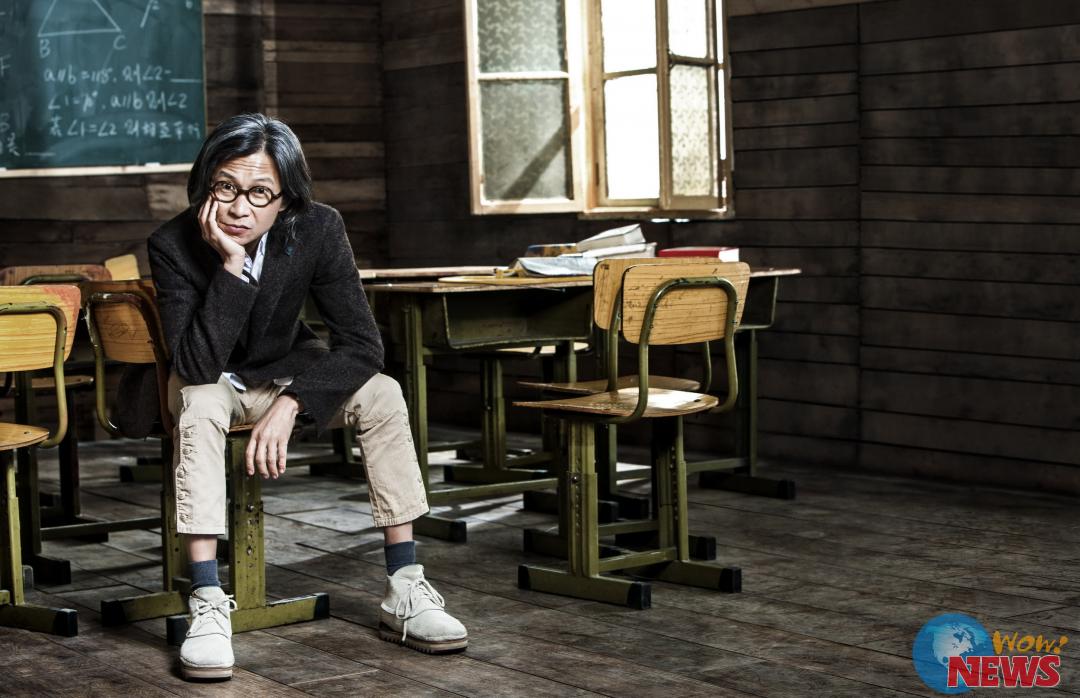
Images from wownews and stills from Perhaps Love.
Translated from the original QDaily article. Original publication date retained.