

Amazon Buys the World's Largest Organic Supermarket. Will Big Companies Make Organic Consumption More Democratic? | How's the Organic Business Doing, Part 3
Organic began as hippies' revolt against the industrial system and capitalism. Then public panic about food pushed it out of the counterculture and into business, but high prices kept it a niche. Has the story reached a turning point?
Organic began as hippies' revolt against the industrial system and capitalism. Then public panic about food pushed it out of the counterculture and into business, but high prices kept it a niche. Has the story reached a turning point?
On June 16, Amazon announced it would buy Whole Foods for $13.7 billion.
Most of the attention has gone to Amazon. The deal is Amazon's largest acquisition so far, and the fourth-largest in the history of U.S. retail. Amazon, which has been expanding its grocery business, wanted the more than 460 stores the organic supermarket chain runs — enough to make Amazon the country's fifth-largest grocery retailer.
True enough. But another business has been overlooked: organic.
Founded in 1978, Whole Foods was once one of America's most successful retailers. It began selling green, organic, and natural food back when American shoppers had no idea what the word "organic" meant. More than that, Whole Foods showed consumers a healthy way of living, "changing the way Americans produce, buy, and eat food".
Between 2010 and 2013, Whole Foods' same-store sales grew 7% or more every year, and its stock peaked in 2013. By 2014, its profit was three times what it had been in 2007.

The irony is that just as Americans grew more health-conscious and organic became a trend, Whole Foods got stuck, its growth slowing year after year. According to this year's second-quarter earnings report, same-store sales have now fallen for seven straight quarters, and the stock is worth barely half what it was at its 2013 peak.
The reason isn't hard to see. Once organic became a profitable business, the big retailers moved in and took away many of Whole Foods' customers. More important, the arrival of giants like Walmart lowered the price threshold, and low prices quickly dissolved the lifestyle Whole Foods stood for.
By 2006 Walmart was already the largest seller of organic milk, and it began stocking far more organic food on its shelves. It also said it wanted to democratize organic food — low prices have always been Walmart's sharpest weapon.
While other retailers sold organic food at 20-30% above comparable conventional products, Walmart's chief marketing officer, John Fleming, claimed Walmart's organic food would cost only 10% more.
By 2014, Walmart, trying to rescue its sliding same-store sales, teamed up with the organic brand Wild Oats to launch more than 100 organic products priced 25% below comparable ones — clearly hoping to pull in a broader base of shoppers. Last year Walmart dropped the partnership, but went on to stock still more organic fresh food.

The rivalry between Walmart and Amazon, of course, took shape long before this deal. It has only grown more direct and more heated in the past few years.
Each keeps "invading" the other's territory. Clothing is probably the clearest case. Amazon, 13 years into the fashion business, has kept buying fashion e-commerce platforms and signing up brands, and even launched a clothing label of its own. By Bloomberg's reckoning, Amazon's share of the U.S. apparel market will rise from 6.7% in 2015 to 18.8% in 2020.
Walmart, America's largest clothing retailer, has no intention of being passed. Last August, after buying the e-commerce startup Jet.com for $3 billion, it bought three more apparel-related e-commerce companies over the next six months, widening the range of clothing on its online platform. On the very day Amazon announced the Whole Foods deal, Walmart confirmed it was buying the menswear site Bonobos.
Amazon's purchase is read as one more escalation in that fight. The day the news broke, Amazon's stock rose 2.8% and Walmart's fell 4.4%.
Amazon's entry is bound to move the U.S. organic market. According to the nonprofit Research Institute of Organic Agriculture (FiBL), the United States is now the world's largest organic food market, with 43% of global organic retail sales.
Figures from the Organic Trade Association (OTA), the trade body for the U.S. organic industry, show that while organic food is only 5% of American retail sales, more than 75% of supermarkets sell organic products and more than 82% of American households buy them.
Neither Amazon nor Walmart, clearly, plans to sit out what comes next.

Amazon and Walmart are not the only big companies betting on this market.
Last September PepsiCo launched an organic version of Gatorade, saying it would keep innovating to meet athletes' different needs. Organic soft drink sales keep climbing; the compound annual growth rate from 2012 to 2017 was 4%.
Unilever, meanwhile, led a $9.2 million Series C-2 round for the meal-kit delivery company Sun Basket last month; what sets Sun Basket apart from its rivals is exactly its focus on organic, non-GMO ingredients. In April, Unilever — a company built on margarine — also said it would follow the health trend and put its margarine business up for sale.
More and more big companies are entering the organic market. China is no different. Whoever is counting, China turns up as one of the fastest-growing organic markets in the world. Over the past decade China's organic market has grown thirtyfold, and it is now the fourth-largest organic food market anywhere.
Amazon's purchase of Whole Foods has also invited comparison with JD.com's investment in Yonghui Superstores in August 2015. Yonghui rode fresh food against the tide of a slumping supermarket business and has grown into China's fifth-largest supermarket chain.
In March of this year, COFCO's Womai.com took a stake in Liangshiwang, an organic e-commerce platform in southern China. Earlier, in May 2015, Sun Art Retail — parent of RT-Mart and Auchan — became the largest shareholder in Futianwang, an e-commerce site built around organic food, while China Resources Vanguard opened blt, its boutique supermarket chain centered on fresh food, as far back as 2009.
"Organic" is not a new idea. The organic food that is working its way into the mainstream country by country began in the counterculture of the 1960s.
In the late 1960s, hippies started looking for ways to grow their own vegetables. One of the reasons organic farming got started is a worry that is still with us: chemicals in agriculture. They feared what pesticides, herbicides, and insecticides would do to the human body and to the environment.
Many hippies also distrusted the industrial system and capitalism. Organic, at the time, was the opposite of industrial, and farming the ordinary way meant conspiring with the food industry. Whole Foods founder John Mackey was one of them. Many customers at his first store were hippies who loathed chain supermarkets, and the store sold no meat, no sugar, and no coffee.

Organic farming then was a fringe pursuit, and nobody trusted it. Earl Butz, U.S. Secretary of Agriculture from 1971 to 1976, took it as no serious matter at all and mocked its low yields: "When you hear the word organic, think starvation."
What finally made the public notice organic food was, again, panic.
In 1990, CBS's 60 Minutes reported that American growers were spraying apples with the carcinogen Alar, and demand jumped at once for organic food, which was sold as free of chemicals. Between 1990 and 1996, organic food grew by more than 20% a year.

Another sign that organic food was rising in status: the U.S. government finally began to take this fast-growing niche seriously, and to regulate it. In 1990 Congress passed the Organic Foods Production Act, and the Department of Agriculture started drafting a standard for organic food.
Settling that standard took nearly a decade. By the time the final version appeared, the organic food market had grown from $1 billion in 1990 to $6.46 billion in 1999. It took that long because everyone meant something slightly different by "organic food," and things grew more tangled once big companies began climbing into the field.
Big companies were not ignoring organic food even then, though they made less of it than they do now. In 1996 H.J. Heinz bought Earth's Best, a maker of organic baby food; General Mills opened two organic yogurt lines for Yoplait in the late 1990s and, in 1999, bought Small Planet Foods, which made organic frozen food.
Gary Hirschberg, president of Stonyfield — later one of America's most popular organic yogurt brands — told The New York Times in a 1999 interview that mainstream retailers used to ignore them entirely, and that now big chains like Kroger and Safeway were calling to ask whether he could supply organic yogurt.

As the well-known American food writer Michael Pollan tells it, the early organic movement was not only about a way of farming. It was a wholesale overhaul of the food business: agriculture without chemicals, anti-capitalist food co-ops, and a rejection of refined cooking.
In the draft organic standard the USDA published in 1997, genetically modified food, food fertilized with sludge, and irradiated food could all count as organic. Many people protested, and all three were struck from the final version.
As we can now see, that was at best a small victory for the old idea of organic. Three other big arguments ran through the department's draft: Does a factory farm count as organic? Must organic cattle be raised on pasture? Can organic food contain additives and synthetic compounds?
In the end, organic food did not escape industrialization.
Big companies brought mass production to the organic business anyway, turning out assembly-line food that met the organic standard — and their hold over this fast-growing industry will only tighten.
Processed organic food is probably the clearest case. The American organic standard ended up letting non-organic additives and synthetic compounds in: as long as they stay under 5% of a product's weight, the product can still carry the "certified organic" label.
Which chemicals get in is decided by the National Organic Standards Board; two-thirds of its 15 members are enough to add a substance to the list. Those members have included big companies such as General Mills, Campbell Soup, and Whole Foods, which naturally shapes how organic food is regulated. Carrageenan, for instance, which can give some people digestive trouble, made the list anyway.
Once production could be scaled, big companies quickly squeezed the small organic companies and farms. Whole Foods, buying ingredients, naturally looked for the biggest farms it could find to keep costs down. By 2001, in California, the most important farming state in the country, the five largest farms already held half of a $400 million organic farming market.
To most shoppers it hardly matters whether the organic food they buy betrays the original organic standard. Or rather: before they have worked out what is going on, they are already paying for the "organic" label on a half-understanding of it.
According to a report published last December by the U.S. polling organization Pew Research, 68% of American adults had bought organic food in the past month; 76% of them said they bought it to get healthier food, and the next most common reason was to help the environment (33%).

Whether organic food is in fact healthier or safer than non-organic food is still an open question.
A 2012 paper in the Annals of Internal Medicine reviewed 237 studies and concluded that organic food is no healthier and no safer than conventionally grown food. On pesticide residue, a 2012 Stanford study found that organic fruit and vegetables did carry less residue than ordinary produce, but the residue on ordinary produce fell within the standards of the Environmental Protection Agency — that is, it does no harm to the body.
Other research points to organic food being more nutritious. In 2013, separate studies reported that organic tomatoes hold more vitamin C and that American organic milk holds more omega-3s, but other researchers questioned those reports — organic tomatoes are smaller than ordinary ones, for instance, which makes the totals hard to compare.
None of this stops consumers from believing organic food is healthier. And as the survey shows, plenty of people, like the first hippies, eat organic partly because it is better for the environment.
That way of thinking follows naturally once organic food joins up with the local-food movement. Michael Pollan has noted that after organic food was scaled up, "many founders of the organic movement, and pioneers like Joel Salatin, believe the moment to go beyond organic has arrived — that it is time once again to raise the bar for America's food system."
"Farm to table" is what that moment produced. Its advocates urge people to buy from local farms or grow food themselves, and they usually insist the food be organic as well. "Farm to table" avoids the resources burned and the pollution caused by shipping organic food long distances, and it gives small organic farms, which cannot fight big companies on price, something to compete with.

This appetite for knowing where food comes from has reached China too. But China and the United States are two very different markets.
As we discussed in the first two parts of this series, the first reason Chinese consumers choose organic is usually "safety." Like imported food, organic is not a category of its own here; it is one label among many that are taken to mean safer.
Yang Xuetao, former executive president of the Shanghai organic food company Tony's Farm, told QDaily that in his view EU certification, U.S. certification, natural farming methods and the rest can all stand as marks of decent food quality: "Organic isn't the only option. Now that overseas shopping has taken off and more countries have opened their exports to China, there will be more and more good food, so organic's share of the high-quality food category falls a little every year."
The head of procurement at blt, China Resources Vanguard's boutique supermarket chain, told QDaily that Chinese shoppers today do not simply want to eat more, or eat a wider variety: "Today's consumers like chasing down where a product comes from, tracing its origin, and buying what's in season." Among the labels the market generally reads as healthy — imported, green, natural, additive-free, organic — organic holds no special advantage.
China's organic certification system has not made the "organic" label better than the others either.
In line with standards elsewhere, China's organic product standard forbids "the use of chemically synthesized pesticides, fertilizers, growth regulators, and feed additives, as well as genetically engineered organisms and their products."
But China's oversight has not kept up with developed countries. China began certifying organic food in 1995, and certification then multiplied to the point of glut: at the peak there were more than 30 certification bodies nationwide and 3.3 million hectares of certified organic land. Only after 2005, when the National Standard for Organic Products was issued and the government cleaned up certification, did the numbers fall back to 23 bodies and 2 million hectares.
The revised Implementation Rules for Organic Product Certification and the regulations alongside them, in force since March 2012, tightened scrutiny of certification but also doubled its price, pushing up the cost and the price of organic products.
With certification in this muddle, the whole organic food industry has been feeling its way toward better ways to win consumers over. On farms run on the CSA model, seeing is believing has taken the place of certification: getting people to come out and inspect the farm, and to build trust with the growers, has become the most important step.
Restaurants that practice "farm to table" likewise use the ingredients themselves to convince diners of their quality and their rarity — enriching the meal while hoping the diner will turn into a customer who buys the ingredients as well.
Price, though, has always been the barrier. According to a report from Switzerland's Research Institute of Organic Agriculture, China is now the world's fourth-largest organic food market, worth 4.7 billion euros. The top three are the United States (35.8 billion euros), Germany (8.6 billion euros), and France (5.5 billion euros). Measured per person per year, though, China spends just 3 euros. Switzerland is highest at 262 euros a year, followed by Denmark (191 euros) and Sweden (177 euros).
That gap is read as enormous room to grow. BIOFACH, an organic food fair that started in Nuremberg, Germany, has staged shows in China since 2007. Its managing director, Guo Yiqian, told QDaily that the Chinese market is growing fastest, and that both attendance and products at the China show beat the other exhibitions in Asia: "Apart from the parent show in Nuremberg, the China show is the best in the world."
But Percy Wachata Misika, the UN Food and Agriculture Organization's representative for China, North Korea, and Mongolia, told QDaily in an interview that for developing countries like China the hardest part of doing organic well is organization: "You have to organize the producers and the whole production chain, from production to consumption. Farmers have to know what they are doing, the certification system has to be complete, and the quality system has to be complete too, because once products that don't meet the rules reach the market, people lose confidence in the whole industry, and then it's finished."
In organic food, nobody gets a shortcut.
For big companies, though, the shortcut is distribution. As Colin Sebastian, an analyst at the investment bank Robert W. Baird, put it: "Amazon views grocery as one of the most important long-term growth drivers for its retail division, and buying Whole Foods gives Amazon scale and density that would otherwise take years to build."
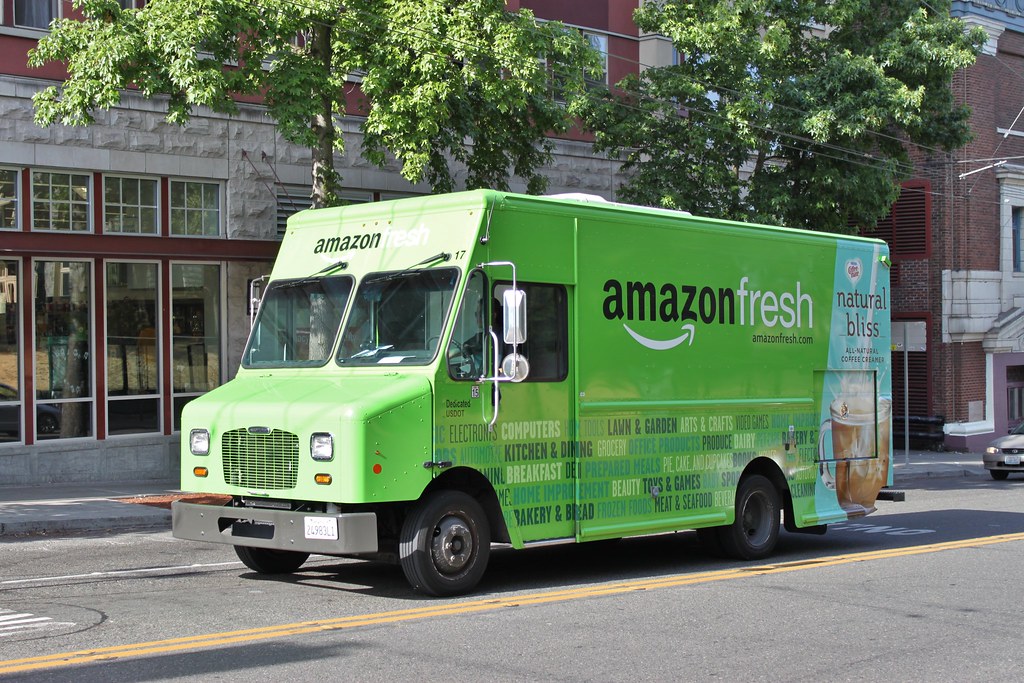
Amazon has not yet explained what it plans to do with Whole Foods, but analysts think it will eventually use those 460-plus stores to sell its own brands and devices, and to build up Amazon's membership programs and the Amazon Fresh service — much as its rival Walmart is already trying to do, mixing online and offline channels to sell people everything.

Amazon is hardly the first to take that shortcut into organic by buying it. Last year Danone paid a steep $12.5 billion for WhiteWave Foods, which makes healthy drinks and food; in 2014 General Mills bought the mac-and-cheese company Annie's for $820 million, then rolled out 54 new products within a year and lifted Annie's sales 11% under its new owner.
For a big company, buying a name is much faster than building a product. Amazon's purchase may tell organic's online-to-offline story differently.
Twenty years ago organic food in the United States cost 57% more than ordinary food — for many people, plainly a luxury. The same is true in China today: even with consumers reaching for better goods, organic is still a niche.
The savings from the deal, which is expected to close in the second half of this year, will let Amazon push the price of organic food down, and the number of Americans who can afford to eat organic may keep rising.
More big companies in the market may make organic consumption more democratic. It also brings, unavoidably, another argument: is this still the organic we started with?
Chart design: Feng Xiuxia
Cover image: Whole Foods, Flickr, Pixabay
Translated from the original QDaily article. Original publication date retained.